ChIP-seq
End-to-end ChIP-seq Services

- Full project: From chromatin preparation through analysis
- Library QC metrics and sequencing-ready material or FASTQ delivery
- Detailed report with QC, peak calls, and biological insights
Simultaneously measure RNA expression and chromatin modifications in the same cell. Profile histone marks, transcription factors, and gene expression together to reveal regulatory mechanisms without separate assays or flow sorting. Compatible with 10x Chromium workflows for seamless integration into existing single-cell pipelines.
Dual Readout
RNA + Protein
UMI Yield
5,000+ UMI/cell
Throughput Options
Standard + Multiplex

| Product | Catalogue # | Platform | Size | List Price | |
|---|---|---|---|---|---|
| Droplet Paired-Tag | DP8101 | 10x Chromium | 8 Reactions | $2,470 | Order |
| Droplet Paired-Tag | DP16101 | 10x Chromium | 16 Reactions | $4,098 | Order |
| Multiplex Paired-Tag | MDP8101 | 10x Chromium | 8 Reactions | $2,580 | Order |
| Multiplex Paired-Tag | MDP16101 | 10x Chromium | 16 Reactions | $4,280 | Order |
Need guidance? Compare all kit options →
Paired-Tag technology combines antibody-targeted chromatin profiling with RNA sequencing in individual cells, eliminating the need for separate scCUT&Tag and scRNA-seq experiments. By simultaneously capturing transcriptomic and epigenetic information, researchers gain direct insight into how gene regulation correlates with chromatin state across cell types and conditions.
Target any validated antibody—histone modifications, transcription factors, or chromatin remodelers—while preserving RNA integrity. Profile H3K4me3, H3K27me3, H3K27ac, and other marks alongside gene expression to map regulatory landscapes. Goes far beyond ATAC-seq's open-chromatin view to reveal specific protein-DNA interactions driving cellular identity.

Designed for compatibility with 10x Genomics Chromium workflows (ATAC or Multiome kits). Nuclei prepared with Paired-Tag reagents flow directly into standard 10x barcoding, eliminating custom hardware or workflow modifications. Analysis pipelines (Seurat, Signac, ArchR) process Paired-Tag data using established multiome methods.
RNA-based annotation identifies rare populations, developmental stages, and disease states post-hoc—no flow cytometry required. Discover epigenetic signatures in cell types that lack surface markers or are too fragile for sorting. Ideal for tissues with heterogeneous cell composition where pre-enrichment would introduce bias or technical artifacts.
Researchers use Paired-Tag across developmental biology, cancer genomics, immunology, and perturbation studies to map how chromatin modifications and gene expression interact during cellular transitions, disease progression, and therapeutic response.
Track how histone marks and transcription factor binding evolve during lineage commitment. Map cell fate decisions by correlating chromatin accessibility changes with gene expression shifts across developmental time courses.
Profile tumor heterogeneity by linking aberrant chromatin states to oncogene expression in single cells. Identify epigenetic drivers of therapy resistance and discover rare cell populations with stem-like chromatin signatures.
Characterize immune cell activation states through coordinated changes in regulatory marks and cytokine expression. Dissect how chromatin remodeling controls T cell exhaustion, macrophage polarization, and innate immune memory.
Both kits deliver simultaneous RNA and chromatin profiling, but differ in throughput strategy. Droplet Paired-Tag runs one assay per 10x lane for maximum cells per condition. Multiplex Paired-Tag uses barcoded enzymes to pool up to four assays in one lane, reducing per-sample sequencing costs.
| Feature | Droplet Paired-Tag | Multiplex Paired-Tag |
|---|---|---|
| Assays per 10x Lane | 1 assay | Up to 4 assays (pooled) |
| Cells per Reaction | 10,000 typical | 7,500 typical (per assay when multiplexed) |
| Total Throughput | 10,000 cells/lane | 30,000 cells/lane (4 assays × 7,500) |
| Cost per Assay | Standard sequencing cost | Reduced (shared sequencing) |
| Workflow Complexity | Standard | Requires sample pooling step |
| Best For | Deep profiling of single conditions; pilot studies | Multi-condition experiments; time courses; replicates |
Contact our scientists for a consultation. We'll help you select the optimal kit configuration based on your experimental design, budget, and throughput requirements.
Get Expert AdviceThe following Safety Data Sheets apply to Droplet Paired-Tag products:
Multiplex kits include these additional barcoded enzymes:
Access detailed protocols and technical documentation by registering with us:
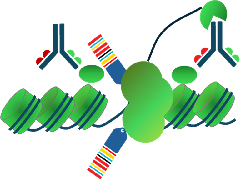
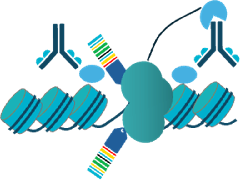
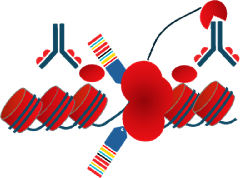
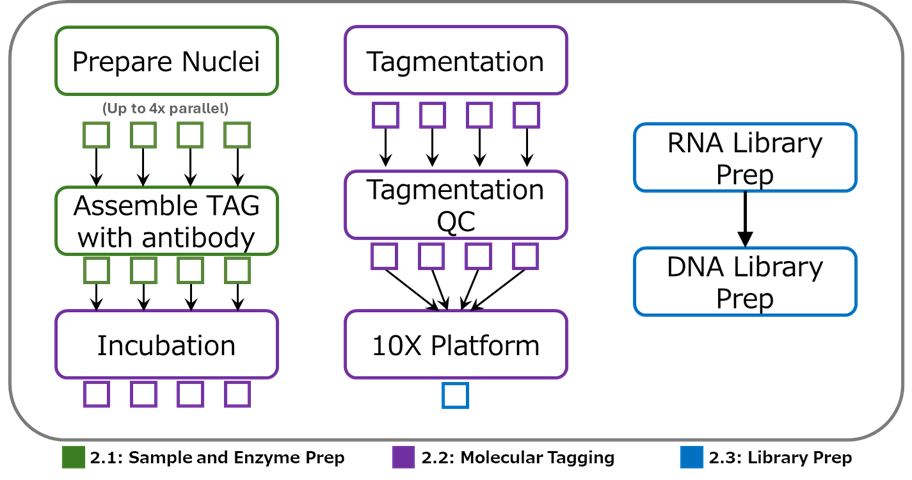
Droplet Paired-Tag captures chromatin modifications and RNA expression simultaneously in individual cells using antibody-targeted tagmentation. Nuclei are permeabilized, incubated with primary antibody and protein A-Tn5 fusion, then tagmented to insert sequencing adapters at antibody binding sites. RNA remains intact throughout, enabling dual profiling when processed through 10x Chromium ATAC or Multiome workflows.


Single-condition experiments requiring maximum cell recovery per sample. Ideal for pilot studies validating antibodies, deep profiling of rare cell types, or projects where workflow simplicity is prioritized. Choose Droplet Paired-Tag when profiling one experimental condition at a time with 10,000+ cells per run.
Available in 8-reaction and 16-reaction kits. Each reaction processes one antibody condition and captures approximately 10,000 cells when paired with 10x Chromium. Includes all tagmentation reagents, optimized protocols, and expert consultation.
Multiplex Paired-Tag extends the standard workflow with uniquely barcoded Tn5 enzymes, enabling up to four independent assays to be pooled in a single 10x Chromium lane. Each antibody condition receives a distinct enzyme barcode during tagmentation. After pooling, samples are processed together through 10x barcoding and sequencing, then computationally demultiplexed. This approach dramatically increases throughput while reducing per-sample costs.


Multi-condition experiments where comparing groups is critical—time courses, dose responses, case-control studies, or replicate profiling. Ideal when sequencing budget is constrained or when reducing batch effects between conditions is paramount. Choose Multiplex when you need to profile 2–4 related samples and can tolerate slightly lower cells per condition (7,500 vs. 10,000).
Available in 8-reaction and 16-reaction kits. Each kit includes four barcoded Tn5 enzyme variants, enabling multiplexed experiments. Comprehensive protocols cover pooling strategies, QC checkpoints, and demultiplexing workflows.
Start with a kit for immediate hands-on experiments, or let our experts handle the complete workflow as a managed service.