ChIP-seq
End-to-end ChIP-seq Services

- Full project: From chromatin preparation through analysis
- Library QC metrics and sequencing-ready material or FASTQ delivery
- Detailed report with QC, peak calls, and biological insights
Epigenome Technologies runs validated single-cell RNA-seq, ATAC-seq, and multiome workflows generating high-quality cell-type-specific expression profiles, chromatin accessibility maps, and integrated regulatory landscapes. We qualify inputs, run the benchwork, and deliver interpretable outputs that drive the next phase of your research.
scRNA-seq
Cell-Type Resolution
scATAC-seq
Regulatory Elements
Multiome + Spatial
Integrated Landscapes
| Service | Cat. No | Input Requirements | Best For | Inquiry |
|---|---|---|---|---|
| scRNA-seq (3' or 5') | SCRNA-301 | 500 to 100K cells/sample | Cell-type identification, differential expression, multiple platforms | Quote |
| scATAC-seq | SCATC-302 | 1K to 100K nuclei/sample | Regulatory element discovery, open chromatin, multiple platforms | Quote |
| Multiome (ATAC+RNA) | MULTI-303 | 1K to 10K nuclei/sample | Integrated regulatory landscapes; 10X Chromium or BD Rhapsody | Quote |
| Spatial RNA (Takara Trekker) | SPRNA-304 | Fresh-frozen tissue sections | Tissue architecture, cell-cell interactions | Quote |
| Spatial Multiome (Takara Trekker) | SPMLT-305 | Fresh-frozen tissue sections | Spatial regulatory landscapes | Quote |
Single-cell profiling reveals insights bulk measurements obscure—cellular heterogeneity within tissues and disease states, rare population identification (immune infiltrates, stem cell niches, drug-resistant clones), developmental trajectories and lineage commitment decisions, and regulatory mechanisms linking chromatin state to transcriptional output at single-cell resolution.
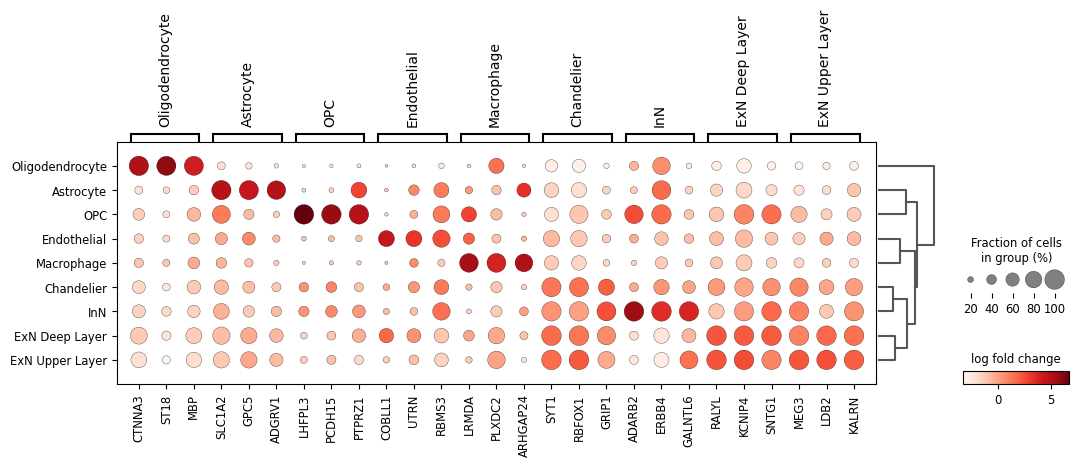

Single-cell RNA sequencing quantifies transcript abundance at single-cell resolution, revealing cellular heterogeneity, rare populations, and developmental trajectories that bulk measurements obscure. We deploy 10x Genomics Chromium (3' and 5' chemistry) and BD Rhapsody platforms for transcriptome-wide or targeted profiling, with FFPE-compatible workflows for archival specimens.
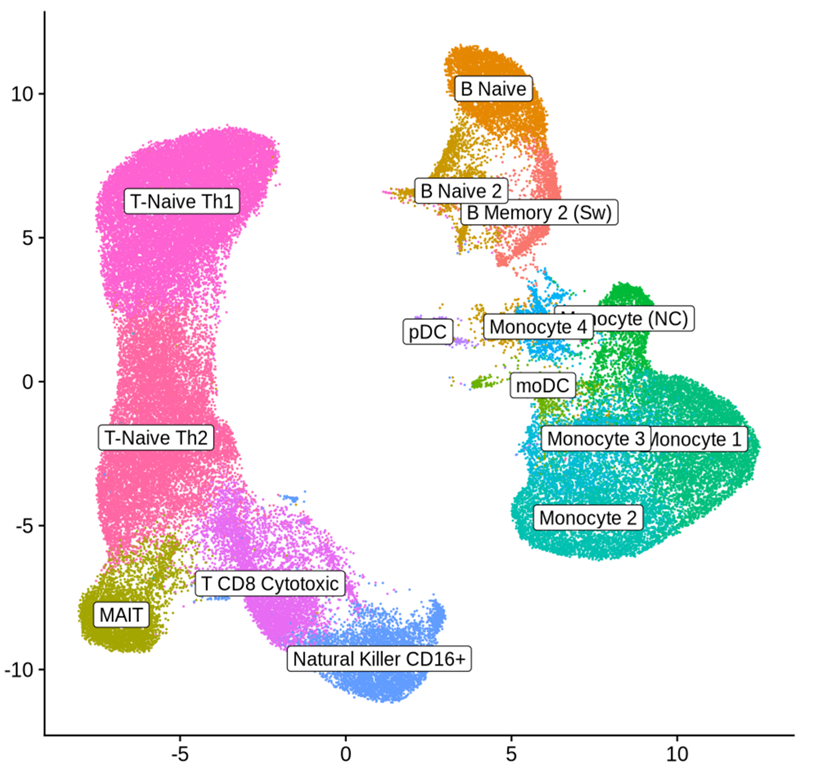
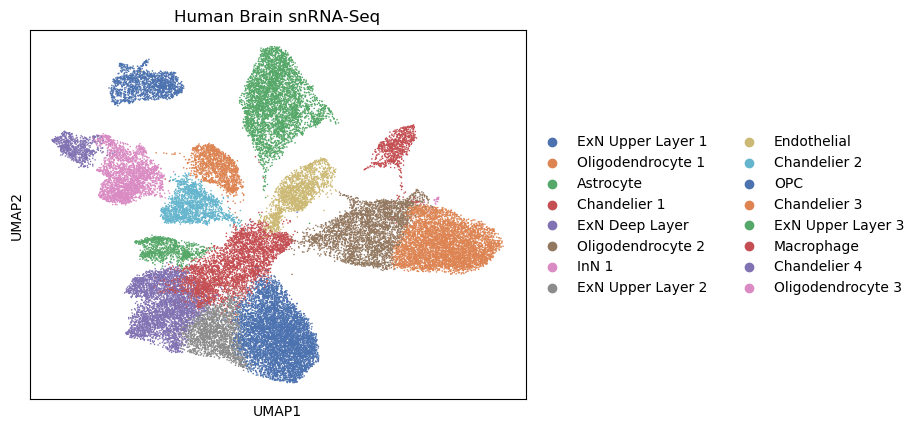
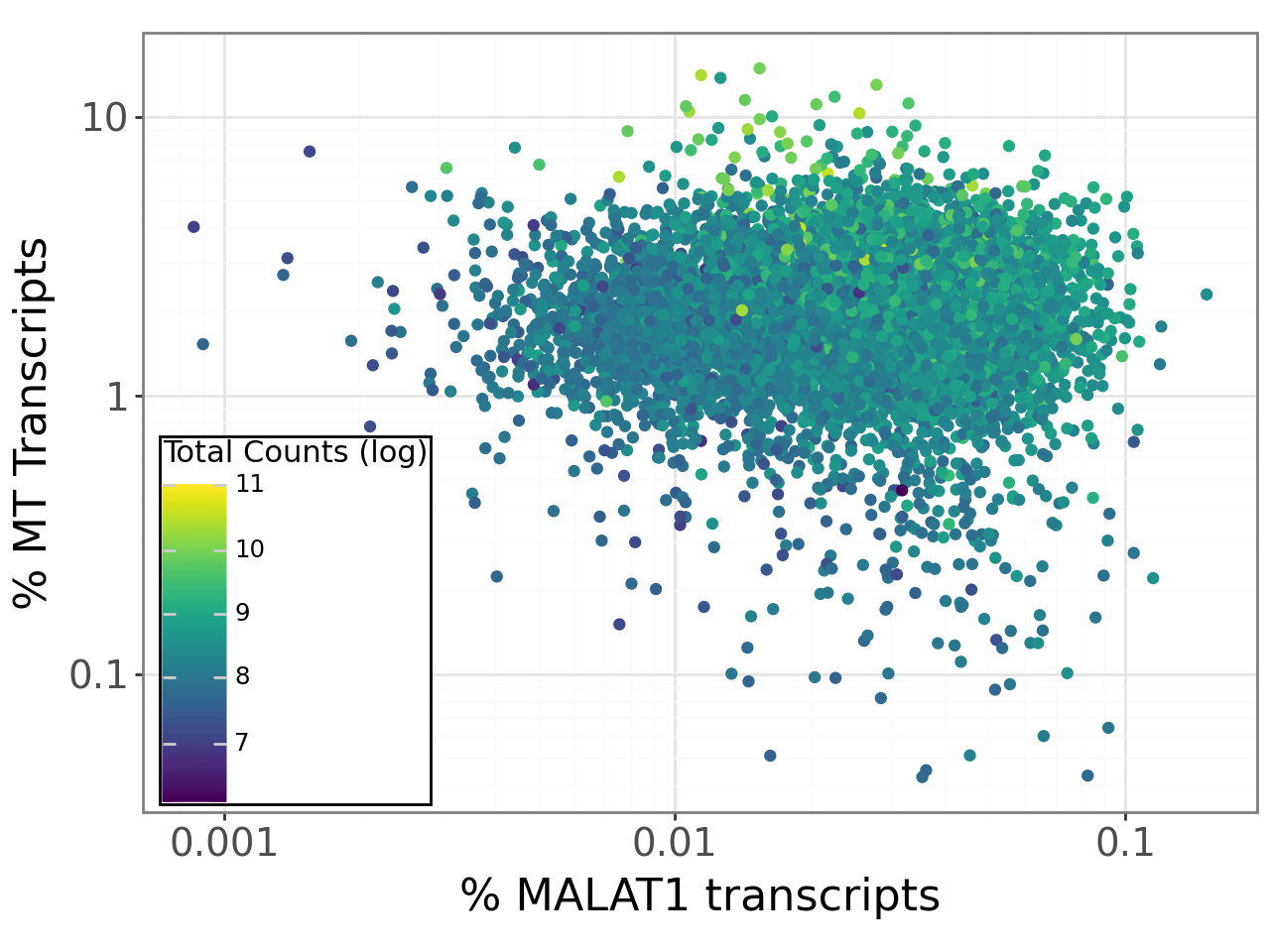
Sample qualification with viability assessment, platform selection (10x or BD Rhapsody), and sequencing depth determination.
Cell encapsulation, barcoding, and reverse transcription with integrated debris filtering and doublet detection.
cDNA amplification and library prep (3' or 5' chemistry) with QC on yield, fragment size, and complexity.
NovaSeq or NextSeq sequencing, followed by cell calling, clustering, differential expression, and trajectory inference.
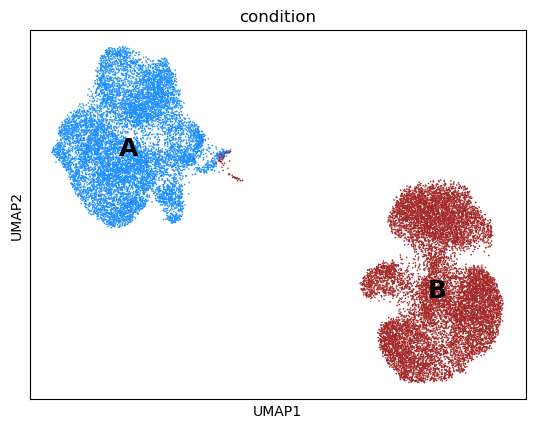
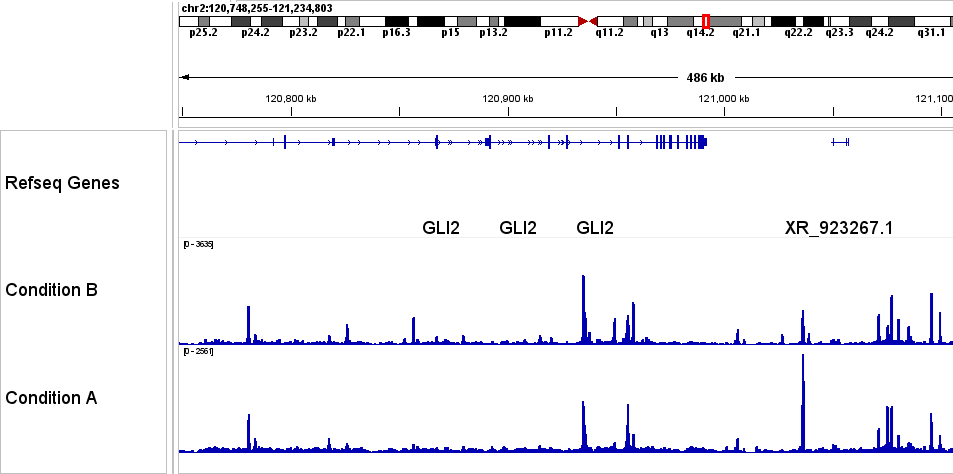
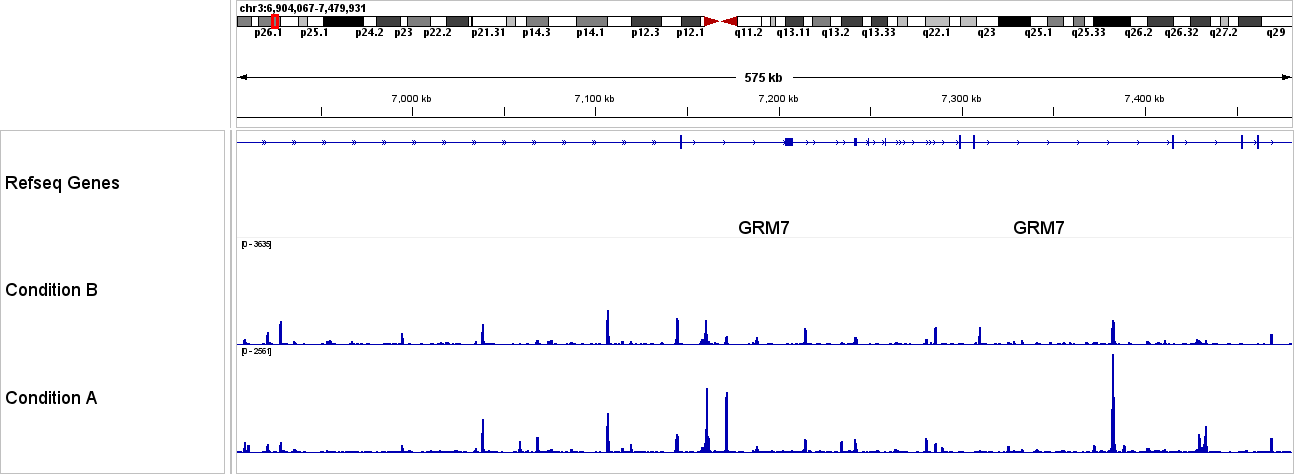
Single-cell ATAC-seq maps chromatin accessibility at single-cell resolution, revealing regulatory element activity, TF binding motifs, and chromatin state heterogeneity across cell types. We use 10x Genomics Chromium ATAC workflows to profile genome-wide accessibility, identifying cell-type-specific enhancers and silencers that drive transcriptional programs.
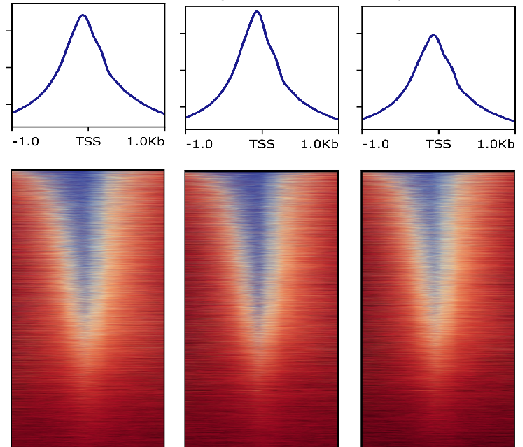
Nuclei isolation protocol optimization, sample qualification with debris assessment, and sequencing depth planning.
Nuclei encapsulation, barcoding, and tagmentation with integrated QC on nuclei quality and transposition efficiency.
Amplification and library prep with QC on fragment size distribution (nucleosomal ladder) and complexity.
NovaSeq sequencing, followed by cell calling, peak calling, motif enrichment, gene activity scoring, and clustering.
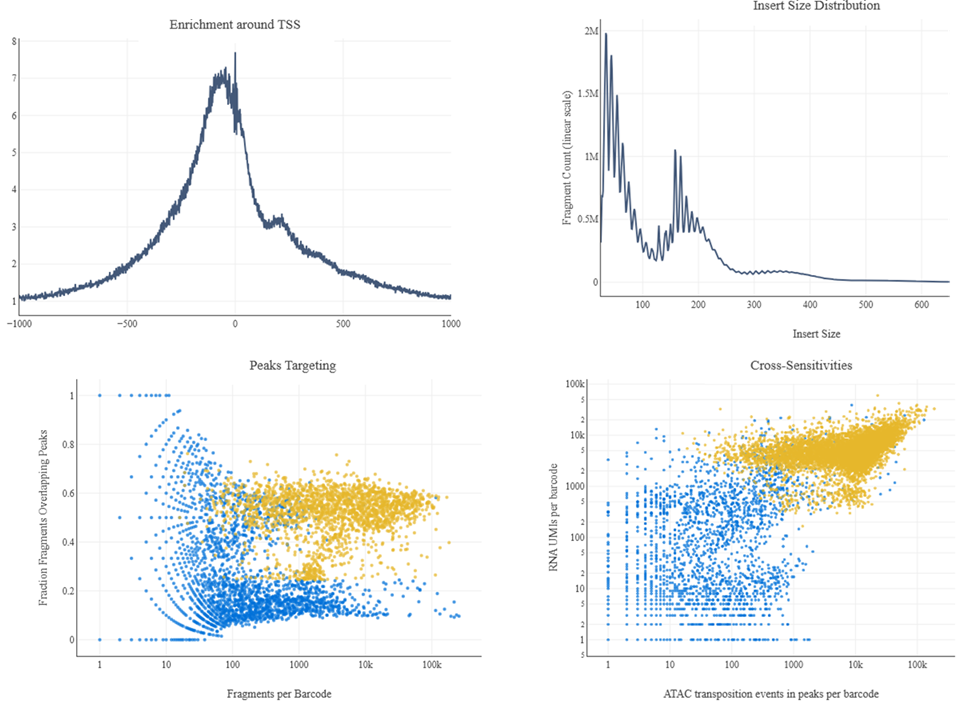
Nuclei isolation optimization, sample qualification, and dual-modality sequencing depth planning (ATAC + RNA).
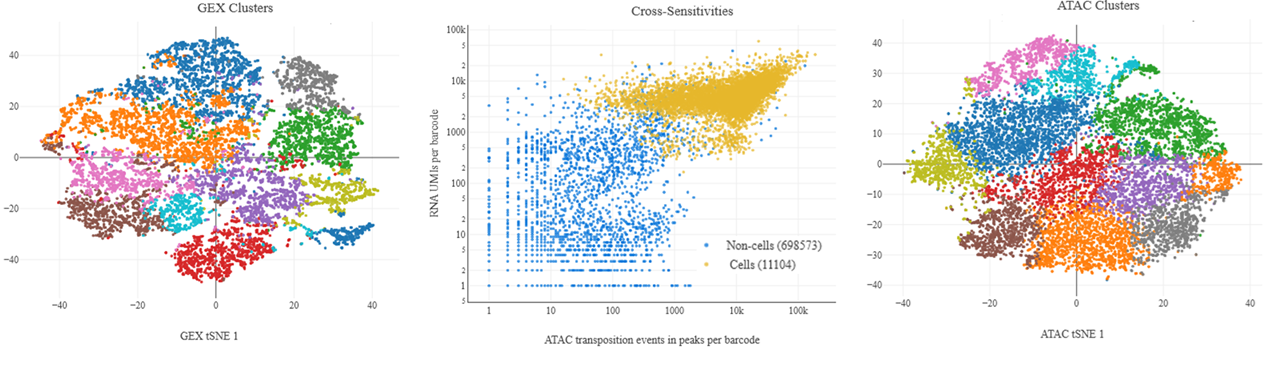
Nuclei encapsulation with simultaneous ATAC tagmentation and RNA capture from the same cell, with integrated barcoding.
Separate ATAC and RNA library prep from barcoded material with QC on both modalities (fragment size, yield, complexity).
Dual sequencing (ATAC + RNA), followed by joint cell calling, clustering, enhancer-gene linkage, and integrated analysis.
Takara Trekker spatial profiling captures spatially-resolved RNA or multiome (ATAC+RNA) data from fresh-frozen tissue sections, preserving native tissue architecture and enabling cell-cell interaction analysis, neighborhood enrichment, and spatial gene expression gradients. We deploy Trekker workflows for tumor microenvironment mapping, developmental niche characterization, and spatial regulatory landscape profiling.

Tissue section preparation, cryosectioning optimization, and quality assessment with H&E staining.
Spatial capture on Takara Trekker slides with spatially-barcoded spots, followed by tissue permeabilization and RNA/ATAC capture.
Spatial library prep (RNA or multiome) with QC on capture efficiency, spot-level yield, and tissue morphology preservation.
NovaSeq sequencing, followed by spatial mapping, cell-type deconvolution, neighborhood enrichment, and cell-cell interaction analysis.
Share your biological questions, sample availability, and study goals. We will return a scoped single-cell brief outlining recommended platform mix (scRNA-seq, scATAC-seq, multiome, or spatial), QC checkpoints, and downstream analysis.