ATAC-seq Services: End-to-End Chromatin Accessibility Profiling
Epigenome Technologies provides end-to-end ATAC-seq services covering library prep, sequencing, and bioinformatics for fresh or frozen tissues and cryopreserved cells, yielding detailed genome-wide maps of open chromatin.
High-resolution chromatin maps
Deep, biologically informative profiles
Reliable Performance Across Cohorts
Consistent results, sample to sample
Scientist-Led Support
Guidance at every step
ATAC-seq for Open Chromatin and Regulatory Element Discovery
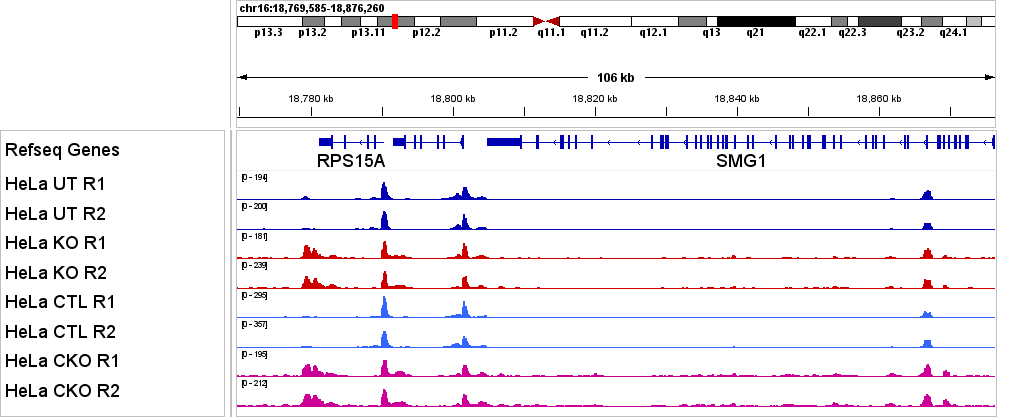
ATAC-seq profiles chromatin accessibility at base-pair resolution, surfacing which regulatory elements (such as promoters, enhancers, and other cis-regulatory elements) are exposed to binding by proteins such as transcription factors or polymerase. From samples to figures, this turnkey ATAC-seq service handles library prep, sequencing, and bioinformatics, delivering ready-to-use maps of open chromatin and differential accessibility across your cohorts.
Key ATAC-seq Applications
- Mechanistic oncology and immunology studies that benefit from enhancer-level resolution.
- Developmental or disease cohorts with scarce material or shifts in regulatory landscape.
- CRISPR, degrader, and perturbation screens validating on-target chromatin outcomes.
- Cell and gene therapy programs: monitor regulatory state in CAR‑T across discovery and optimization.
ATAC-seq Collaboration Model
- Joint design sessions align sample availability, replicates, sequencing depth, and effective controls.
- Project scientists remain embedded through QC reviews, data processing, and interpretation.
- Bioinformatic integration of ATAC with RNA, CUT&Tag, or third-party datasets on request.
Downstream ATAC-seq Analysis
- Motif discovery and regulatory annotation for differential peaks.
- Promoter and enhancer linkage summaries for translational storytelling.
- Actionable slide-ready visualizations delivered alongside raw outputs.
The ATAC-seq service was a really useful addition to the ChIP-seq: looking at occupancy with respect to open chromatin has been a big deal for this project. Bundling the ATAC service with ChIP made it very cost-effetive for us.
Post-doctoral researcher, NYIT
ATAC-seq Workflow and Checkpoints
-
Plan
We confirm sample condition, spike-ins, sequencing depth, and optional multiomic deliverables before kickoff.
-
Prepare & construct
Nuclei isolation and ATAC chemistry with QC on fragment ladders, complexity, and transposition efficiency.
-
Sequence
Paired-end runs on AVITI, NovaSeq, or NextSeq platforms with lane balancing against internal standards.
-
Interpret
Automated alignment peak calling, motif enrichment, and data packages aligned to your preferred analysis environment.
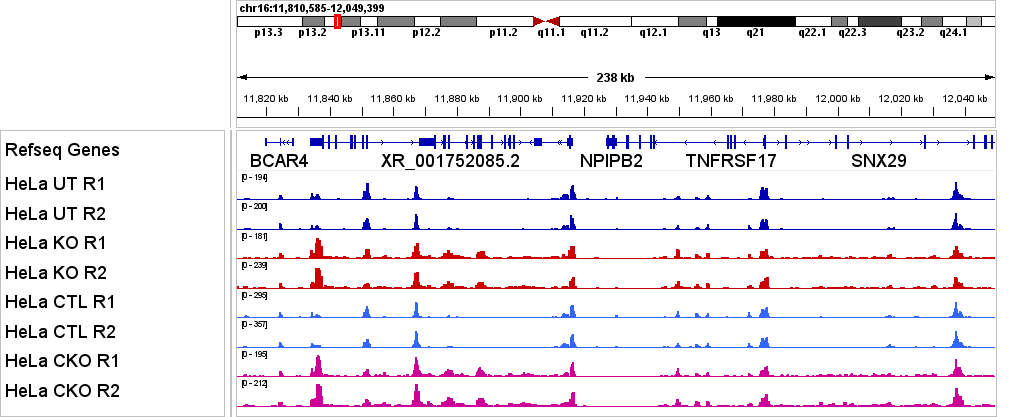
Operational cadence
- Day 5 nuclei and library QC review with your project scientist.
- Day 10 library acceptance with fragment distribution and concentration reports.
- Day 14 FASTQ and peak delivery.

Platinum-quality Chromatin Accessibility
- FRiP distribution summaries with cohort medians and percentile bands.
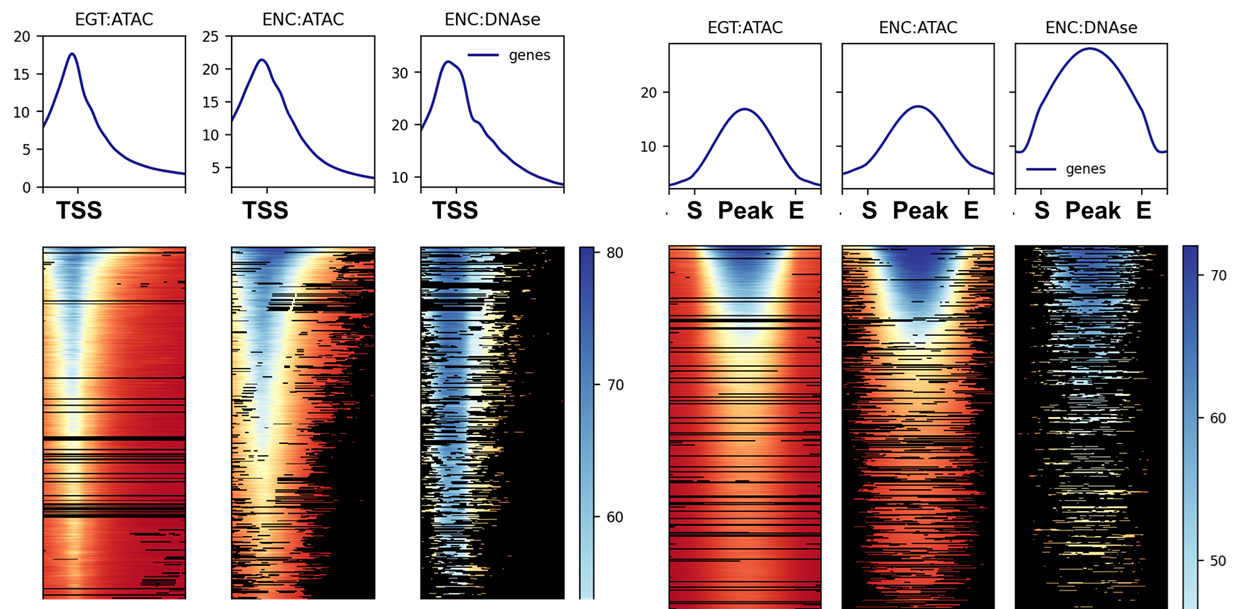
- TSS enrichment overlays compared directly to ENCODE guidance for every sample.
- Insert-size and nucleosome ladder plots reviewed prior to sequencing approval.
- Peak concordance against ENCODE DNase-seq and your internal reference datasets.
ATAC-seq Delivery Package
- Sequencing-ready libraries with concentration, laddering, and complexity documentation.
- FASTQ, peak sets, and metadata formatted for immediate cloud or on-prem ingestion.
- Interpretive report summarizing differential accessibility, pathway context, and recommended next steps.


| Deliverable | Summary | SLA |
|---|---|---|
| Sequencing-ready libraries | Fragment distribution, concentration, and QC documentation. | Day 10 |
| FASTQ and peak files | Aligned reads, narrowPeak/broadPeak outputs, ENCODE-compliant metadata. | Day 14 |
| Interpretive report | Motif enrichment, differential accessibility, and pathway overlays. | Day 16 |
Partner with our scientists
Share your targets, cohort size, and required timelines. We will return a scoped ATAC-seq brief outlining assay mix, QC checkpoints, and downstream reporting.
- Sample requirements: 75K nuclei preferred with low-input contingencies available.
- Storage guidance: Fresh, cryopreserved, or FFPE submissions accepted with documented handling.
- Data options: Raw, processed, and interpretive outputs available individually or bundled.
- Support: Project scientists provide experimental planning and guidance, data reviews, and troubleshooting.