Characterizing Maintenance of Pluripotency with iPSC-Perturb-Seq
New research applies Perturb-Seq analysis to induced pluripotent stem cells to improve our understanding of the genetic underpinnings of pluripotency.
Can Perturb-Seq Help to Define the Genetic Architecture of Induced Pluripotent Stem Cells?
The ability to differentiate into all somatic cell lineages makes human induced pluripotent stem cells (hiPSCs) an important resource for researchers aiming to improve developmental modeling, expand disease research, and develop novel regenerative therapies (Yamanaka, 2020 and Park et al.). Generated directly by reprogramming somatic cell types using a number of similar strategies, hiPSCs broadly resemble embryonic stem cells, the best-known but perhaps least available pluripotent stem cell type. While over a decade's worth of research has identified some of the critical transcription factors and signaling pathways underpinning pluripotency and somatic cell reprogramming (Takahashi & Yamanaka and Wang et al.), we still lack a profound understanding of the dynamic processes and gene interactions that regulate cell state transitions in hiPSCs (Jia et al., Li et al., and Joung et al.).
Given this notable knowledge gap, researchers led by Prashant Mali (University of California, San Diego) generated a CRISPR interference (CRISPRi) Perturb-Seq (Asamson et al. and Dixit et al.) dataset in hiPSCs (Pantazis et al.) that mapped the transcriptional phenotypes associated with nearly 12,000 perturbed genes in over 2.5 million single cells. Overall, Nourreddine and Doctor et al. hope that their new Nature Biotechnology study will provide a resource that will support a better understanding of the pluripotent state in humans (Nourreddine and Doctor et al.).
Paired-Tag technology from Epigenome Technologies generates joint epigenetic and transcriptomic profiles at single-cell resolution and detects histone modifications and RNA transcripts in nuclei with efficiency comparable to single-nucleus RNA-seq/ChIP-seq assays. Could an in-depth analysis of the histone modification and transcriptomic profiles of the same single hiPSCs afforded by the integration of Paired-Tag have provided more profound insight into the transcription factor networks and signaling pathways underpinning the human pluripotent state?
ZBTB41 and RNF7: Perturb-Seq Identifies Novel Regulators of the Pluripotent State
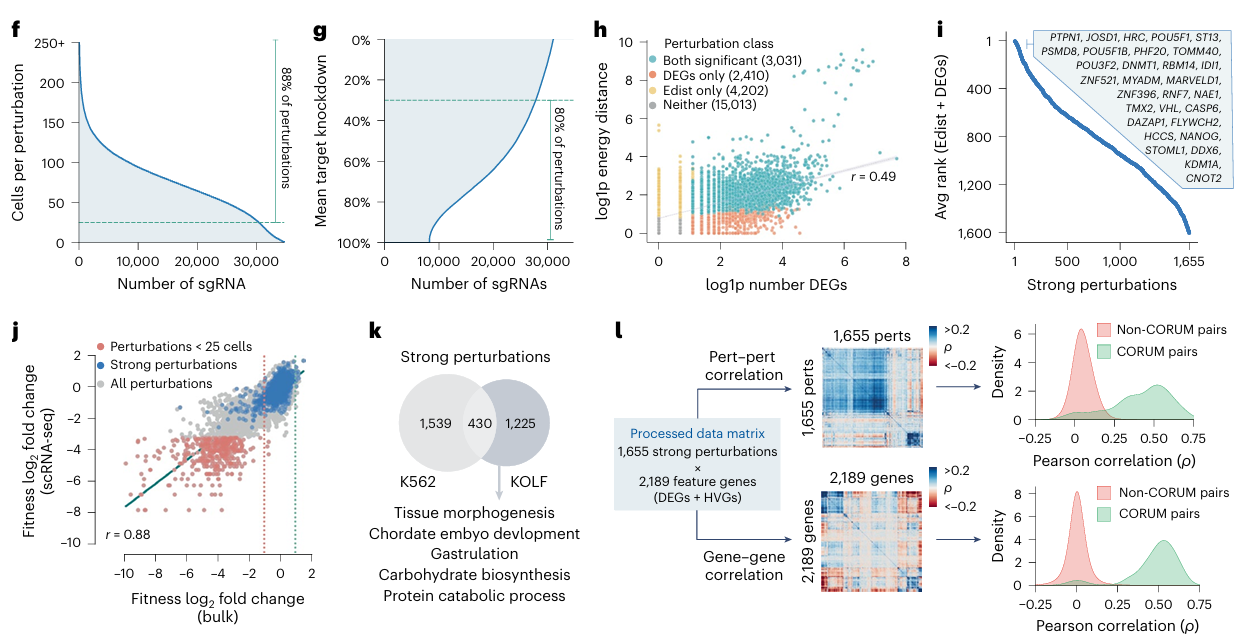
The authors performed an expressed genome-wide CRISPRi Perturb-Seq screen in KOLF2.1J hiPSCs, a well-established reference hiPSC line (Pantazis et al.), targeting nearly 12,000 genes in parallel to systematically map the genetic underpinnings of hiPSC identity by understanding transcriptional phenotypes. The resultant Perturb-Seq atlas, created via correlations among perturbed phenotypes, allowed the authors first to reconstruct known molecular complexes and functional modules (including chromatin regulators, mitochondrial machinery, and pluripotency factors) that define the transcriptional/cellular landscape of hiPSCs and, as such, validate their approach.
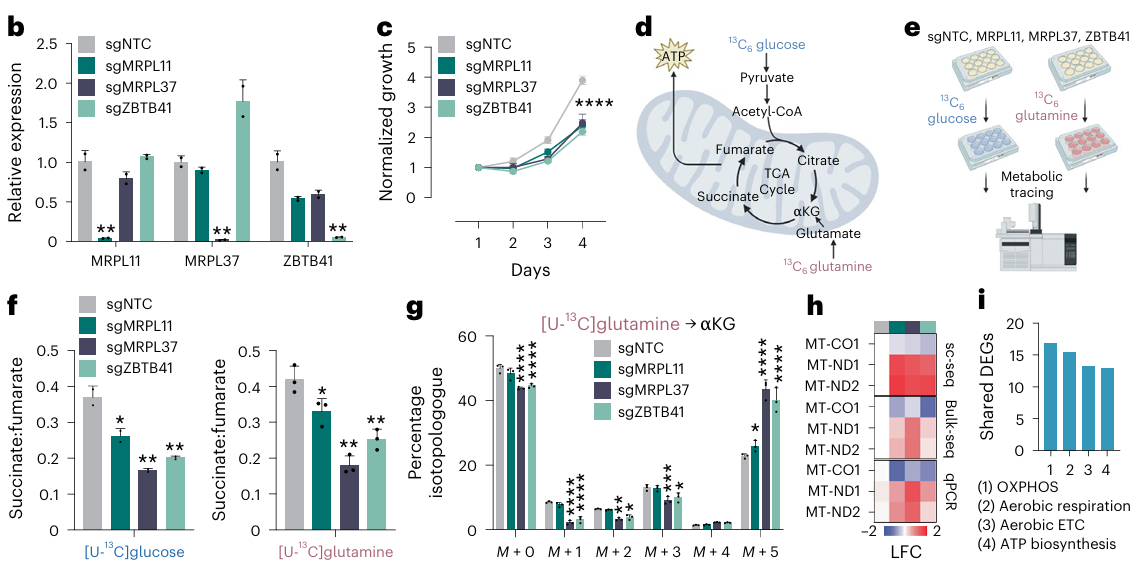
Of greater interest, the authors also established their Perturb-Seq atlas as a means of identifying (and then verifying) previously uncharacterized regulators of the pluripotent state of hiPSCs; these included regulators of cellular metabolism (ZBTB41) and pluripotency (RNF7). Emerging from mitochondrial-associated clusters in the Perturb-Seq atlas of hiPSCs, metabolic flux analysis confirmed a role for ZBTB41 (encodes a poorly described zinc finger and BTB domain-containing transcription factor) in mitochondrial metabolism, positioning this gene/protein as a regulator of tricarboxylic acid cycle activity. Importantly, the metabolic state of hiPSCs represents an important mediator of self-renewal, epigenetic remodeling, and differentiation potential (Ryall et al., Mathieu & Ruohola-Baker, and Jackson & Finley). The RNF7 gene encodes a RING-box protein and core component of Cullin-RING ligases (CRLs) and emerged as an important regulator of pluripotency through an indirect regulatory axis with POU5F1 (which encodes a transcription factor also known as OCT4). Importantly, studies have revealed that the known functions of CLRs - such as cell-cycle progression and DNA repair - intersect with features associated with the pluripotent state (Wu & Zhang), while the antioxidant properties of CLRs (Guo et al. and Sun & Li) may also contribute to hiPSC maintenance through redox buffering by mitigating differentiation signals triggered by oxidative imbalances.
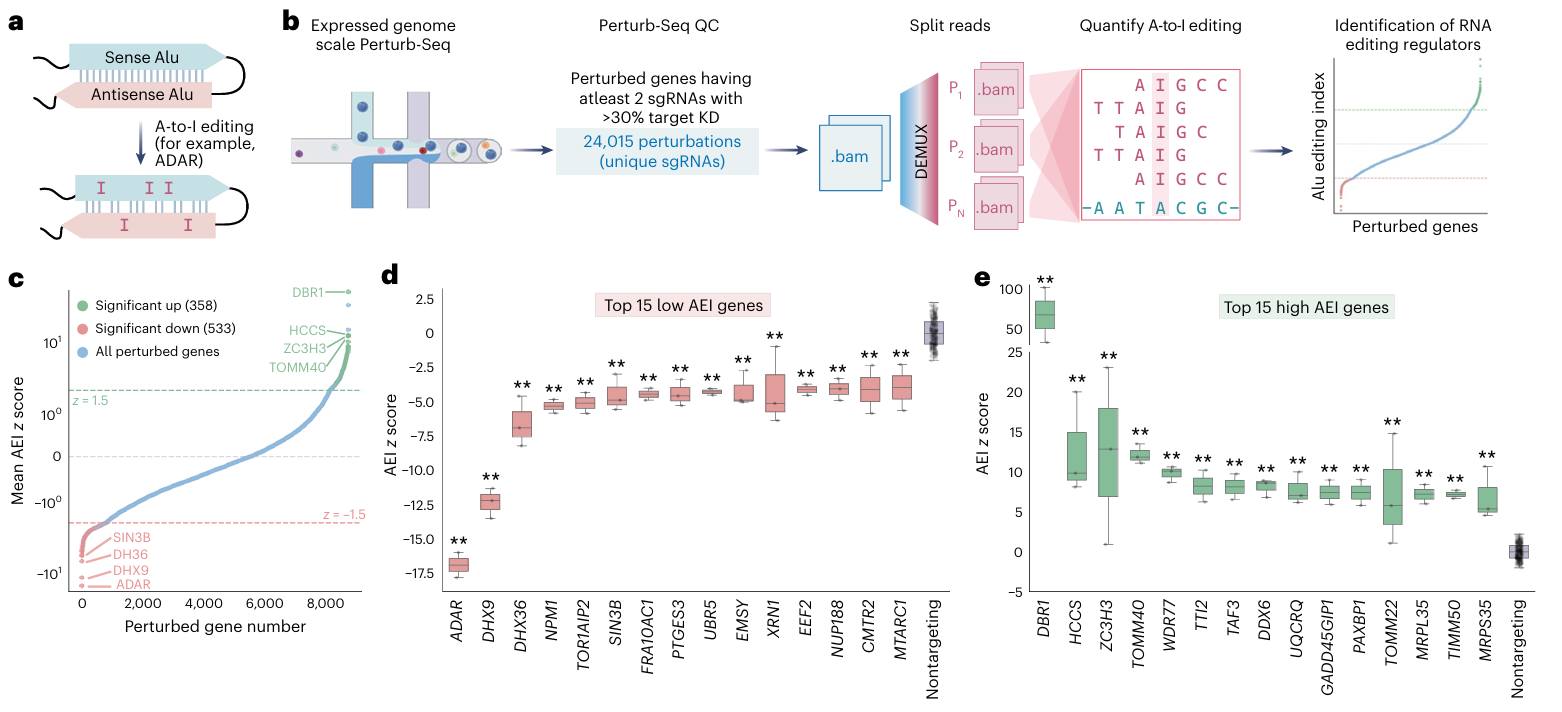
In the final part of this exciting study, the researchers extended their CRISPRi Perturb-Seq analysis beyond changes in gene expression to focus on the impact of gene perturbations on the nucleotide sequence of associated transcripts through RNA editing events. The authors focused on adenosine-to-inosine RNA editing by ADAR proteins (Levanon et al.) and generated an unbiased genome-scale screen of RNA editing modulators assayed through a direct transcriptome-wide RNA editing readout. Excitingly, this approach identified DBR1 (which encodes a RNA lariat debranching enzyme that catalyzes the hydrolysis of higher-order RNA stuctures into linear molecules) as a previously unrecognized regulator of RNA editing and innate immune signaling in hiPSCs; as such, the authors demonstrated that DBR1 knockdown prompted a global increase in RNA editing in intronic regions and an increase in the levels of double-stranded RNA species that can induce immune signaling (Chen et al. and Duan et al.).
)
Perturb-Seq: Providing a Robust Means of Interrogating the Regulatory Networks Governing Pluripotency
Overall, the Perturb-Seq analysis of KOLF2.1J hiPSCs carried out in this exciting study provides a comprehensive resource for interrogating the regulatory networks governing pluripotency; encouragingly, this data has been made freely accessible. However, the authors do not cite certain limitations associated with their research, which include the underrepresentation of pluripotency regulators that impose strong negative effects due to the inherent bias of Perturb-Seq to capture perturbations with small effects, the possible masking of lineage-biasing effects through the application of pluripotency maintenance medium during hiPSC culture, and the need to improve CRISPRi-mediated gene repression and describe CRISPRi off-target effects. They also suggest the next steps that should take place; these include a focus on genes relevant for an hiPSC differentiation trajectory of interest, investigating how perturbations push undifferentiated iPSCs toward that trajectory, and the use of this dataset to train models for perturbation prediction/hiPSC state engineering (Roohani et al./Magnusson et al.).
The implementation of Paired-Tag technology from Epigenome Technologies, which generates joint epigenetic and transcriptomic profiles at single-cell resolution and detects histone modifications and RNA transcripts in individual nuclei with efficiency comparable to single-nucleus RNA-seq/ChIP-seq assays, has the potential to provide deeper insight into such research aims. Could the simultaneous single-cell analysis of histone modification and transcriptomic profiles have provided even deeper insight into the genetic underpinnings of the human pluripotent state?