XIST Activity in Males: Towards the Evolution of Dosage Compensation
A new preprint describes the use of Paired-Tag technology and a novel model system to identify a new role for the long non-coding RNA Xist in males.
Exploring Male Xist Expression with Paired-Tag Technology and a Novel Organism
X-chromosome inactivation - the transcriptional silencing of one X chromosome in each female somatic cell (Payer and Lee) - resolves the imbalance created by the distinct sex chromosome complement in mammals: XX in females and XY in males. The long non-coding RNA Xist (X-inactive specific transcript) expressed by the inactivated X chromosome (Brockdorff et al. and Brown et al.) drives X-chromosome inactivation in females by spreading along the X chromosome and recruiting repressive chromatin factors to silence gene expression (Clemson et al. and Jacobson et al.). The disruption of X-chromosome inactivation has been assumed to significantly interfere with proper development, with Xist expression in male cells considered lethal (Clemson et al. and Bousard et al.). However, recent studies have argued against the female-specificity of Xist expression and described: i) the expression of XIST in cancer cells from a range of cancers in male individuals (Sadagopan et al.); and ii) the association of reactivated Xist/XIST expression in cells from males with autoimmune syndromes with the partial repression of X-linked gene expression (Masson et al. and Dou et al.). Could the implementation of a novel experimental system and simultaneous single-cell transcriptomic and epigenetic profiling using Paired-Tag technology help clarify a potential role for Xist and X-chromosome inactivation in males?
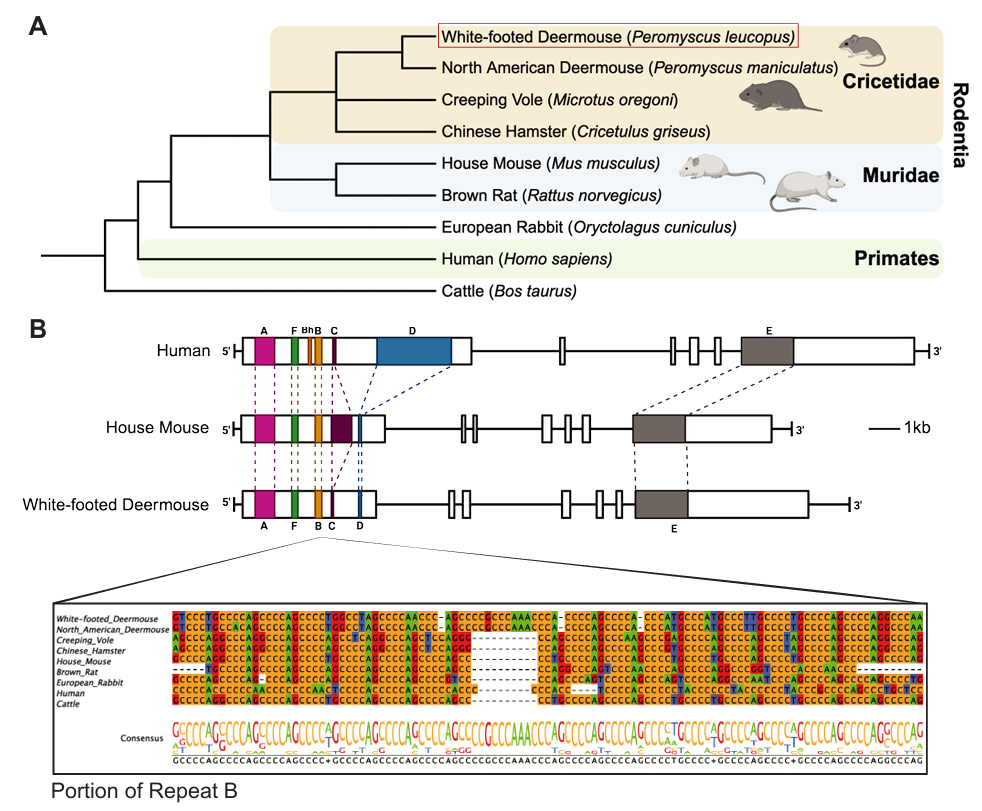
In their exciting recent bioRxiv preprint (De Lourdes Andrade Ludena et al.), researchers led by Sha Sun (University of California, Irvine) recently turned to a novel non-model organism - the white-footed deermouse (Peromyscus leucopus) (Long et al.) - to provide a contrast to canonical model systems (Okamoto et al.) and in the hope of better understanding the role of Xist in male cells under non-disease conditions and the evolution of dosage compensation mechanisms in mammals (which balances X-linked gene expression relative to the rest of the genome). Their integrative analysis included the implementation of Paired-Tag - exploring gene expression simultaneously with detecting H3K27me3 levels in the same single-cell - to explore the potential gene regulatory activity of Xist expression in male cells and evaluate any potential links between chromosome-wide X-chromosome inactivation, dosage compensation, and Xist function. Paired-Tag technology from Epigenome Technologies generates joint epigenetic and transcriptomic profiles at single-cell resolution and detects histone modifications and RNA transcripts in nuclei with efficiency comparable to single-nucleus RNA-seq/ChIP-seq assays. Overall, the findings described in this new preprint now challenge the view of X-chromosome inactivation as a female-specific strategy and provide evidence for the flexible nature of X chromosome regulation in mammals.
Paired Tag - Revealing the How and Where of Xist-mediated Regulatory Activity in Males
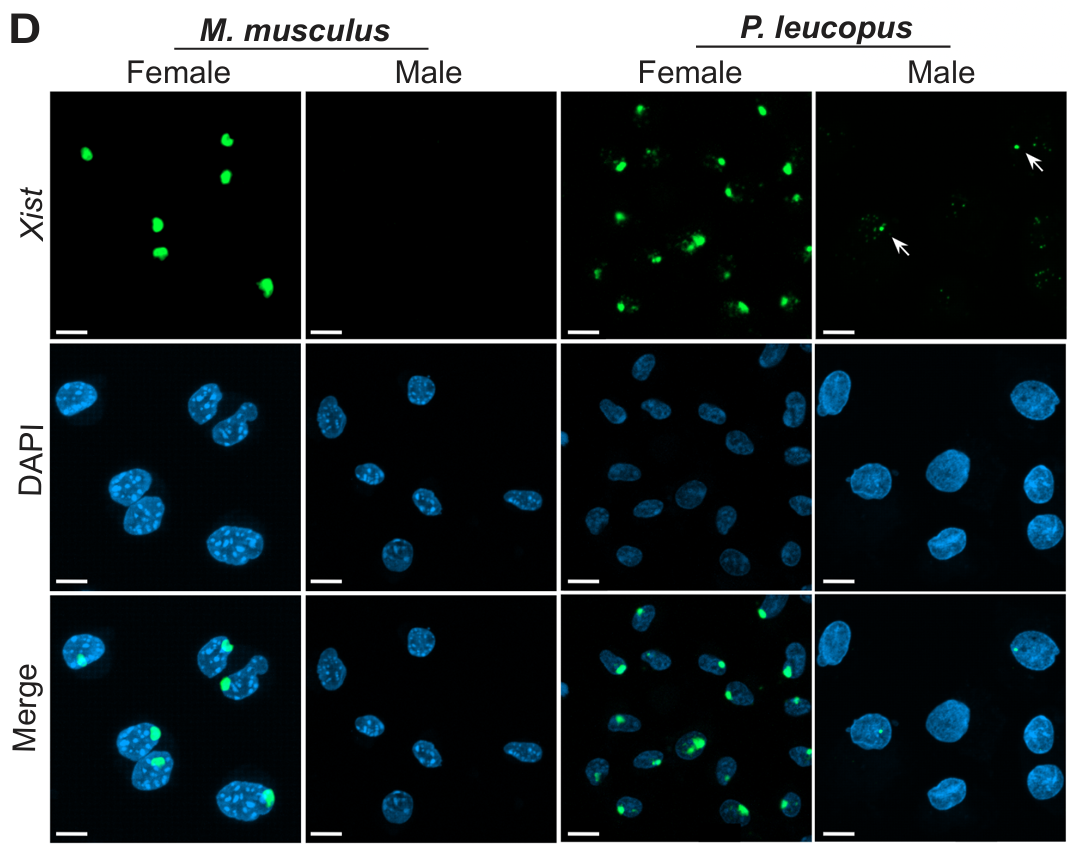
In brief, the authors detected persistent Xist expression in male P. leucopus somatic cells (which possess conventional XY sex chromosomes) as small, discrete spots in the nucleus, which contrasts with the chromosome-wide Xist RNA coating phenomenon observed in females. Subsequent gene expression and chromatin profiling using CUT&Tag and single-nucleus Paired-Tag (Zhu et al.) sought to explore how male Xist expression regulated the X-chromosome/X-chromosome-related gene expression. While Xist expression prompts the chromosome-wide enrichment of the repressive histone mark H3K27me3 and the transcriptional silencing of X-linked genes in females (the so-called large Xist RNA "cloud"), the authors revealed that Xist also associated with H3K27me3 in males but did not silence the entire X chromosome. Instead, they discovered that Xist repressed the activity of a limited set of X-linked genes in males (dosage-sensitive X-linked genes associated with mitochondrial dynamics, cytoskeletal organization, and metabolic regulation, which included the Armcx family; Serrat et al.) but left the majority of X-linked genes largely active. The authors suggest that lower levels of Xist accumulation and the formation of discrete nuclear foci may allow P. leucopus males to tolerate Xist expression without deleterious effects.
In detail, Paired-Tag analysis revealed that Xist-positive nuclei exhibited increased levels of H3K27me3 and reduced transcription at a subset of X-linked genes (including Lancl3, Capn6, Armcx1, and Armcx2) in P. leucopus males. Paired-Tag helped demonstrate how consistent Xist expression associates with localized Polycomb-mediated repression at the single-cell level in male P. leucopus individuals but does not uniformly silence the entire X chromosome; instead, Xist functions within a context-dependent, gene-selective regulatory framework, generating a spatially restricted level of repression that modulates only subsets of X-linked genes.
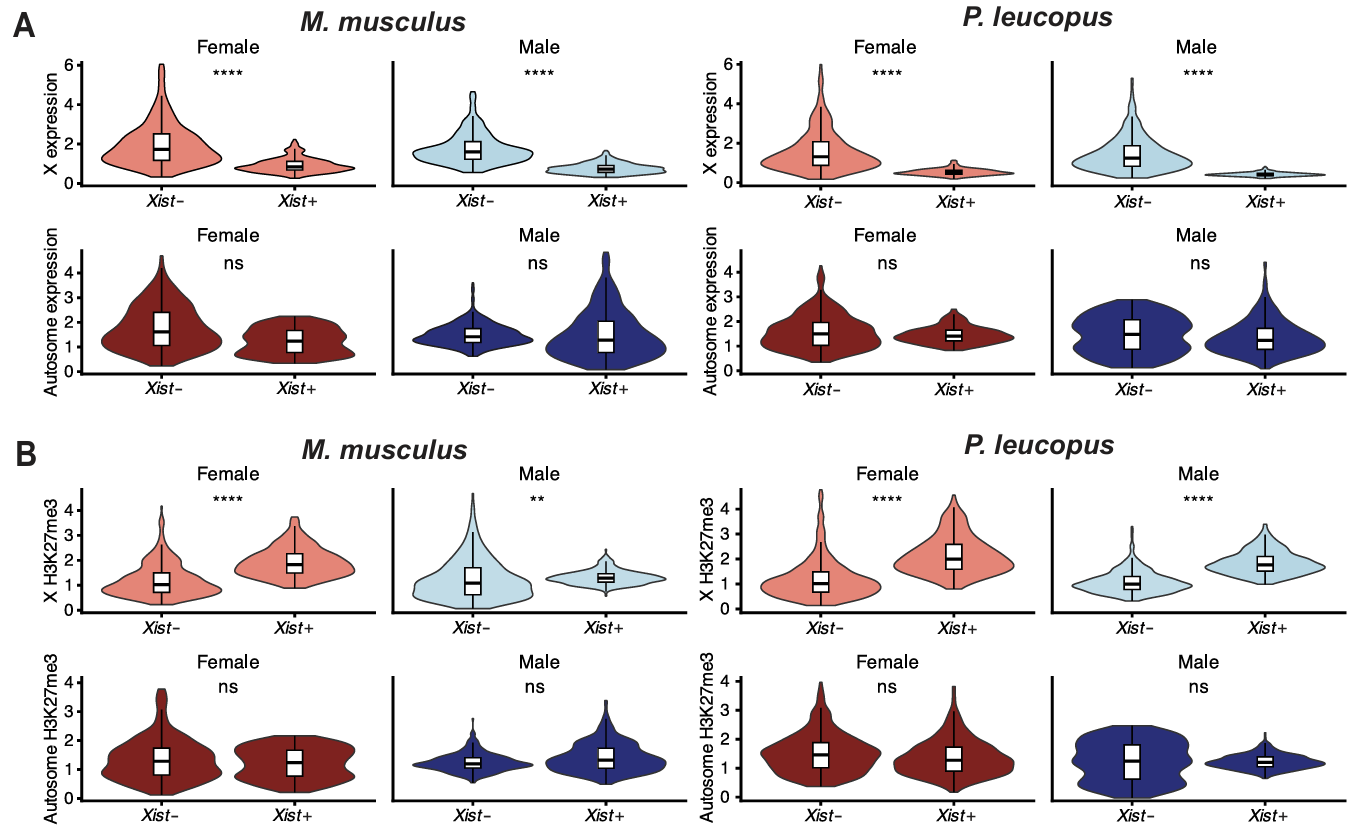
Finally, and of significant note, the authors revealed that male and female P. leucopus individuals failed to achieve complete balance between X-linked and autosomal gene expression with persistent Xist activity, an interesting finding given that the field holds the view that this balance remains essential for mammalian viability.
The Power of Paired-Tag Defines Xist-mediated X Chromosome Regulation
Overall, this exciting study establishes P. leucopus as a model system to explore non-canonical Xist function, challenges the universality of prevailing X-chromosome inactivation models (and suggests an underappreciated mode of context-dependent regulation by Xist across mammalian contexts), and underscores the huge potential of Paired-Tag technology. The implementation of Paired-Tag technology from Epigenome Technologies, which generates joint epigenetic and transcriptomic profiles at single-cell resolution and detects histone modifications and RNA transcripts in individual nuclei with efficiency comparable to single-nucleus RNA-seq/ChIP-seq assays, has the potential to provide deeper insight into your research aims. Check out our homepage to find out more about what Epigenome Technologies has to offer!