RNA as a Critical Component of Chromatin Condensates
A new study identifies locally produced RNA as a critical component supporting the formation and function of chromatin-associated protein condensates.
Pro-tumorigenic Chromatin-associated Transcriptional Condensate Formation: Does RNA Play a Role?
Chromatin-associated proteins can form nuclear condensates - high local-concentration assemblies driven by dynamic and multivalent interactions (Banani et al.) - that support the enrichment of the transcriptional machinery at specific loci to regulate gene expression. While studies have associated dysregulated condensate formation with the development of a range of diseases and disorders, including cancer (Boija et al., Xu et al., and Mathias et al.), we lack a deep understanding of the mechanisms by which chromatin-associated factors regulate the assembly and function of these condensates. RNA represents an important component of biomolecular condensates, with recent evidence suggesting that RNA can modulate transcriptional regulator-mediated condensate formation (Henninger et al. and Asimi et al.); however, the RNA-mediated regulation of the formation and function of chromatin-associated protein condensates under pathogenic conditions had remained largely unexplored.
Recent studies from the laboratories of Yuanyuan Li and Haitao Li (Tsinghua University) and Liling Wan (University of Pennsylvania) recently ventured into unexplored regions by analyzing cancers that harbor pro-tumorigenic mutations in the ENL ("Eleven-nineteen-leukemia") protein. ENL normally binds to acetylated histones via its YEATS domain to support transcriptional elongation at target gene loci (Wan et al. and Erb et al.); however, the team previously highlighted how mutations in the YEATS domain induced aberrant condensate formation at highly selective target loci, which prompted hyperactivated target gene expression and promoted tumorigenesis (Wan et al., Song et al., and Liu et al.). How extrinsic factors may regulate these condensates remains unclear, although RNA remained an interesting target to the authors (Han et al.). Now, a new Molecular Cell study reveals that locally produced RNAs reinforce the nucleation, chromatin engagement, and pro-tumorigenic activity of condensates formed by mutant ENL proteins (Budinich et al.). Overall, this study helps to establish RNA as an important cofactor in the condensate-mediated dysregulation of pro-tumorigenic gene expression.
Paired-Tag technology from Epigenome Technologies generates joint epigenetic and transcriptomic profiles at single-cell resolution and detects histone modifications and RNA transcripts in nuclei with efficiency comparable to single-nucleus RNA-seq/ChIP-seq assays. Could an in-depth analysis of the histone modification and transcriptomic profiles of the same single cells afforded by the integration of Paired-Tag have provided more profound insight into alterations at loci affected by mutant ENL condensate formation?
Mutant Chromatin-associated Proteins and Locally Produced RNA Promote Pro-tumorigenic Condensate Formation
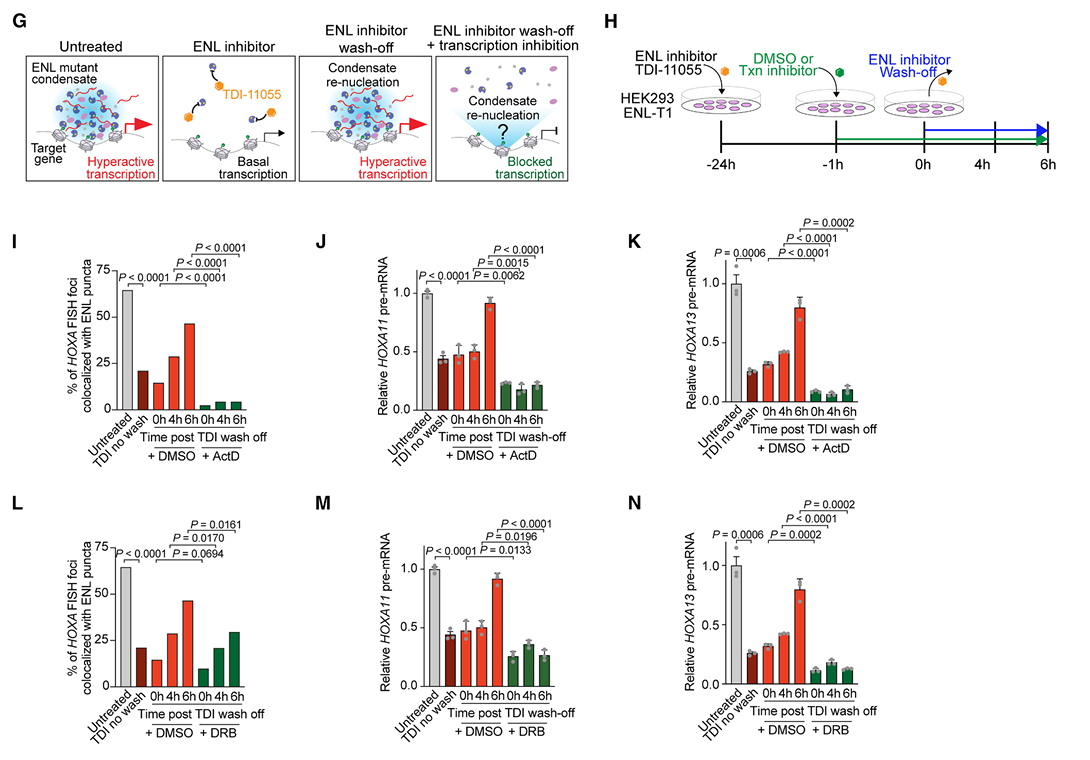
In this recent study, initial in vitro and cell-based investigations revealed that a mutant version of the chromatin-associated protein ENL had the intrinsic ability to bind RNA, which partially depended on a conserved basic patch within the ENL YEATS domain known to aid binding to acetylated histones. Interestingly, increased mutant ENL-RNA binding (using RNA fragments of known target genes) promoted condensate formation at physiologically relevant expression levels and across a range of cell contexts. The interactions with locally produced RNA also promoted mutant ENL condensate formation at endogenous target loci (the HOXA cluster and CBX3 loci), which sustained persistent, locus-specific pro-tumorigenic gene transcription.
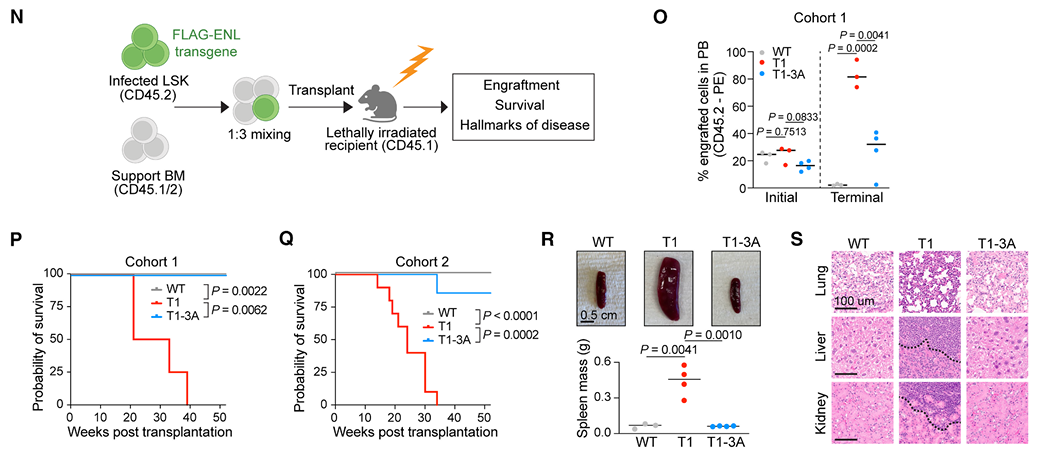
The authors confirmed that RNA binding and ongoing transcription promoted the efficient nucleation of ENL-mutant condensates using a unique chemical strategy (treatment of cells with TDI-11055, a small-molecule inhibitor that competitively blocks the interaction between the ENL YEATS domain and acetylated histones; Liu et al. and Michino et al.) that acutely displaced and then monitored condensate reformation at endogenous loci. These data provided evidence for a model in which mutant ENL displays increased occupancy at pre-existing target loci, with RNA interactions playing a significant role in sustaining ENL occupancy through condensate nucleation. Indeed, additional cell-based assays revealed that RNA binding enhanced the ability of oncogenic ENL mutants to hyperactivate condensate-permissive target gene loci; however, they also revealed that partial disruption of RNA interactions effectively suppresses tumorigenesis induced by mutant ENL in a mouse model even in the background of only a partial reduction of condensate formation, chromatin occupancy, and transcriptional activation at target gene loci. Overall, these data highlighted a critical role of RNA in supporting ENL-mutant-driven pro-tumorigenic activity.
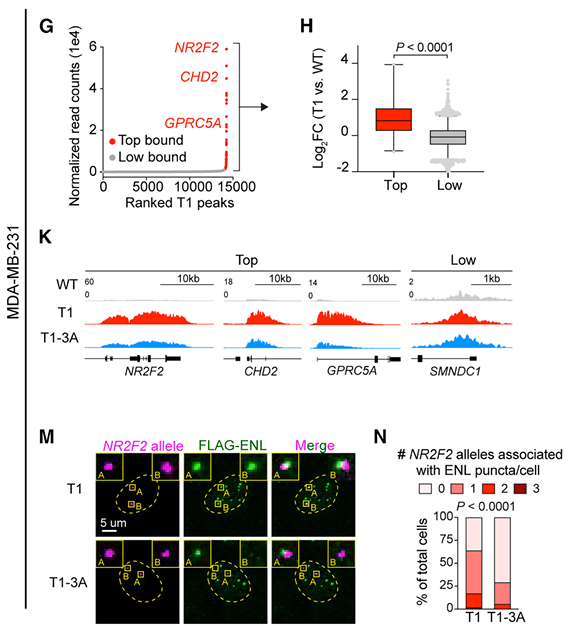
In summary, the authors believe that mutant ENL-driven tumorigenesis may require sustained high-level expression of pro-tumorigenic target genes, with RNA interactions helping to surpass a threshold by enhancing condensate nucleation and gene transcription. They propose that locally produced RNA engages chromatin-bound ENL-mutant molecules during basal transcription, providing the additional cooperative interactions required to promote robust condensate nucleation, which drives the hyperactivation of pro-tumorigenic target genes by enhancing transcriptional bursting. As such, they hypothesize that the interplay between tumorigenic chromatin-associated proteins, chromatin, and locally transcribed RNA described may represent a general principle governing the formation/function of chromatin-associated protein condensates. These data also suggest that condensate-forming pro-tumorigenic proteins can actively co-opt RNA to enhance condensate nucleation/function, thereby highlighting locally produced RNA as the species that promote ENL-mutant condensate nucleation at target loci. The authors also note that their findings suggest that oncogenic condensates may differ from physiological condensates in their response to elevated transcription (Henninger et al.); they suggest that RNAs produced during basal transcription interact with mutant ENL to lower the energetic barriers for condensate formation as ENL-mutant condensates remain stably associated with their target loci despite a high transcriptional output.
RNAs as a Critical Component of Chromatin-associated Protein Condensates: Where to Next?
Overall, these data reveal how chromatin-associated oncogenic proteins can "hijack" locally produced RNA to facilitate locus-specific condensate nucleation and transcriptional output, thereby establishing RNA as a functional factor in condensate-mediated gene dysregulation in cancer. Together, these observations suggest that RNA may play a broader role in facilitating pathogenic condensate formation and function across diverse cancer contexts. Defining the scope and mechanistic basis of this RNA-dependent regulation will be an important direction for future investigation, but what else have the authors planned? They hope to identify yet more negatively charged macromolecules that may interact with the positively charged mutant ENL YEATS domain to promote condensate formation and also shift from chemical inhibition of RNA synthesis to selective RNA depletion, thereby fully exploring the impact of RNA synthesis on condensate formation. Future research may also define whether additional pathogenic condensate-forming proteins (such as TFE3 onco-fusions; Guo et al.) may exploit similar RNA-dependent mechanisms.
The implementation of Paired-Tag technology from Epigenome Technologies, which generates joint epigenetic and transcriptomic profiles at single-cell resolution and detects histone modifications and RNA transcripts in individual nuclei with efficiency comparable to single-nucleus RNA-seq/ChIP-seq assays, has the potential to provide deeper insight into such research aims. Could the simultaneous single-cell analysis of histone modification and transcriptomic profiles have supported an even deeper dive into the consequences of chromatin-associated protein condensate formation in cancer?