Distinct Roles for DNA Methylation in Invertebrates
A study explores the roles of DNA methylation in invertebrates, reporting gene body methylation and a mechanism for intergenerational epigenetic inheritance.
Our General Understanding of DNA Methylation: Just a "Vertebrate Thing"?
The presence of DNA methylation in the genomes of vertebrates (such as you an I) generally associates with the silencing or repression of various elements and processes (Greenberg & Bourc'his and Smith, Hetzel, & Meissner) thanks to the ability of this well-understood epigenetic modification to interfere with transcription factor binding and establish repressive chromatin states at gene regulatory elements (Schübeler, 2015 and Klose & Bird). But are these generally understood epigenetic mechanisms just a "vertebrate thing"? While vertebrate genomes exhibit global DNA hypermethylation (with active promoters and enhancers the notable exceptions; Schübeler, 2015 and de Mendoza, Lister, & Bogdanovic), DNA methylation in invertebrates instead occurs concentrated within the bodies of highly- and constitutively-expressed genes (Suzuki & Bird). While gene body methylation has been linked to critical processes in invertebrates (including environmental adaptation and developmental plasticity; Glastad, Hunt, & Goodisman, Liew et al., Dixon et al., and Sarkies et al.), we lack a deep mechanistic understanding of: i) biological relevance; ii) implications for evolutionary processes across animals; and iii) inheritance in the absence of epigenetic reprogramming during early development (Xu et al.). Importantly, the lack of knowledge regarding gene body methylation in invertebrates has limited any interpretation of epigenetic variation in evolutionary and ecological contexts.
To the hope of filling this considerable knowledge gap, researchers led by Alex de Mendoza (Queen Mary University of London) turned to the cnidarian Nematostella vectensis - known to his friends as the starlet sea anemone - as a tractable model that: i) represents a critical stepping stone between invertebrates and vertebrates (Layden, Rentzsch, & Röttinger); ii) possesses canonical gene body methylation patterning (Xu et al. and de Mendoza et al.) and a simple body plan; and iii) expresses important members of the DNA methylation machinery (Lyko, 2017). Now, a new study from the Mendoza lab - published recently in Nature Ecology & Evolution - reports on their dissection of the functional role of gene body methylation in Nematostella genome regulation (Xu et al.); fascinatingly, they now report that gene body methylation in invertebrates functions to suppress spurious transcriptional initiation within highly and broadly expressed genes and discuss the importance of this epigenetic mechanism to processes such as epigenetic inheritance.
Paired-Tag technology from Epigenome Technologies generates joint epigenetic and transcriptomic profiles at single-cell resolution and detects histone modifications and RNA transcripts in nuclei with efficiency comparable to single-nucleus RNA-seq/ChIP-seq assays. Could an in-depth analysis of histone modifications and transcriptomic profiles of the same single cells afforded by the integration of Paired-Tag have allowed a wider exploration of the distinct functions of epigenetic mechanisms in this invertebrate species?
Defining the Roles of Gene Body Methylation in Invertebrates
Overall, the results of this study provided new knowledge at three distinct levels: these findings i) identified gene body methylation as an evolutionarily conserved genome defense mechanism; ii) clarified the ancestral function of gene body DNA methylation in animal genomes; and iii) revealed the implications of incomplete epigenetic resetting and the heritable regulatory variation in evolution. In brief, the authors discovered that the loss of DNA methylation in the cnidarian model Nematostella vectensis - through the application of inhibitors and translation-blocking morpholinos targeting the DNA methylation machinery - failed to significantly affect development (viable embryos were produced) or gene expression; therefore, these data suggest that gene body methylation does not play a central role in the dynamic regulation of gene expression, which agrees with other relevant studies in invertebrates and plants that previously reported weak correlations between gene body methylation and transcriptional alterations (Bewick & Schmitz, Dixon & Matz, and Briffa et al.).
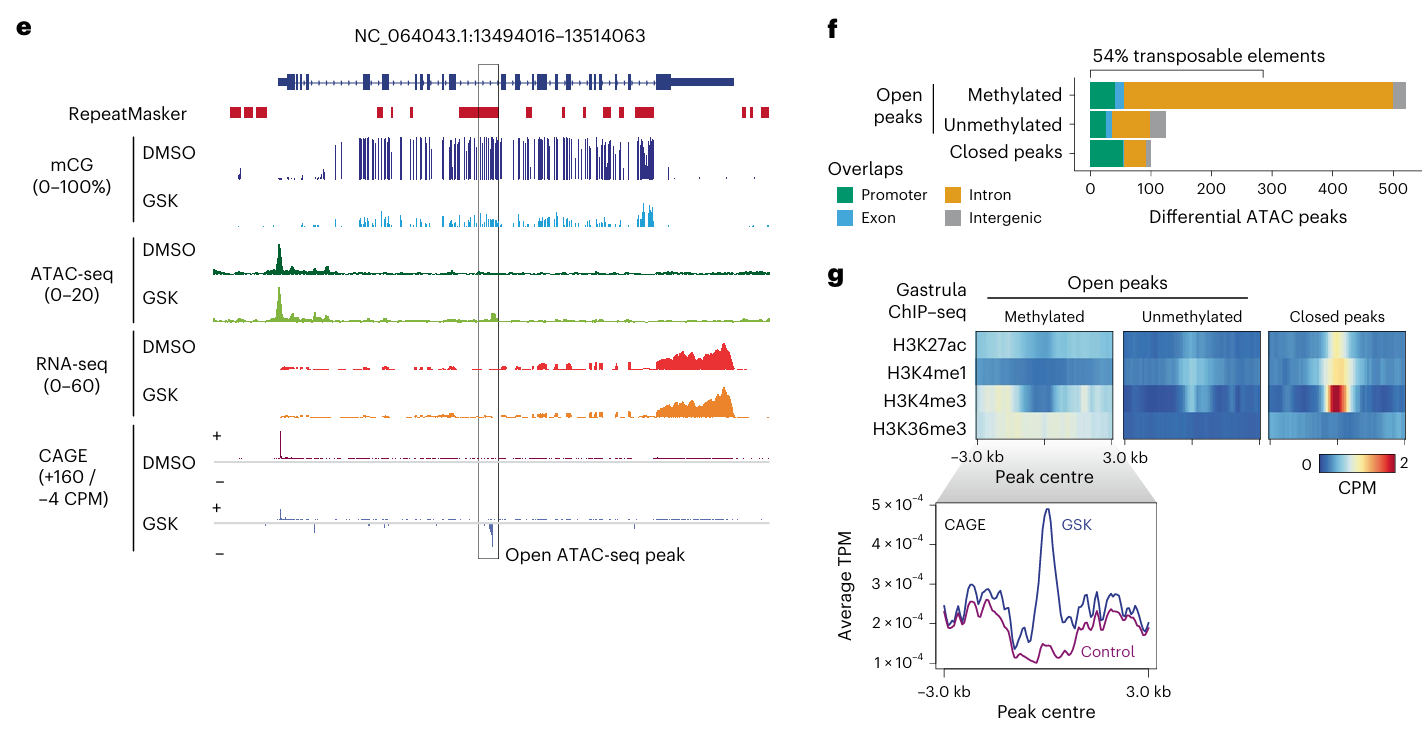
The team did, however, observe a genome-wide increase in chromatin accessibility and spurious transcription initiation, with transposable elements embedded within gene bodies particularly affected; these data suggest that gene body methylation contributes primarily to genome defense/transcriptional integrity, which does mirror findings in vertebrates, where loss of DNA methylation triggers spurious intragenic transcriptional initiation (Neri et al. and Dahlet et al.). The authors note that their current approach to reducing gene body methylation may leave residual levels of DNA methylation and point to the need for genetic approaches targeting catalytic activity to further dissect the functional consequences of total DNA methylation loss.
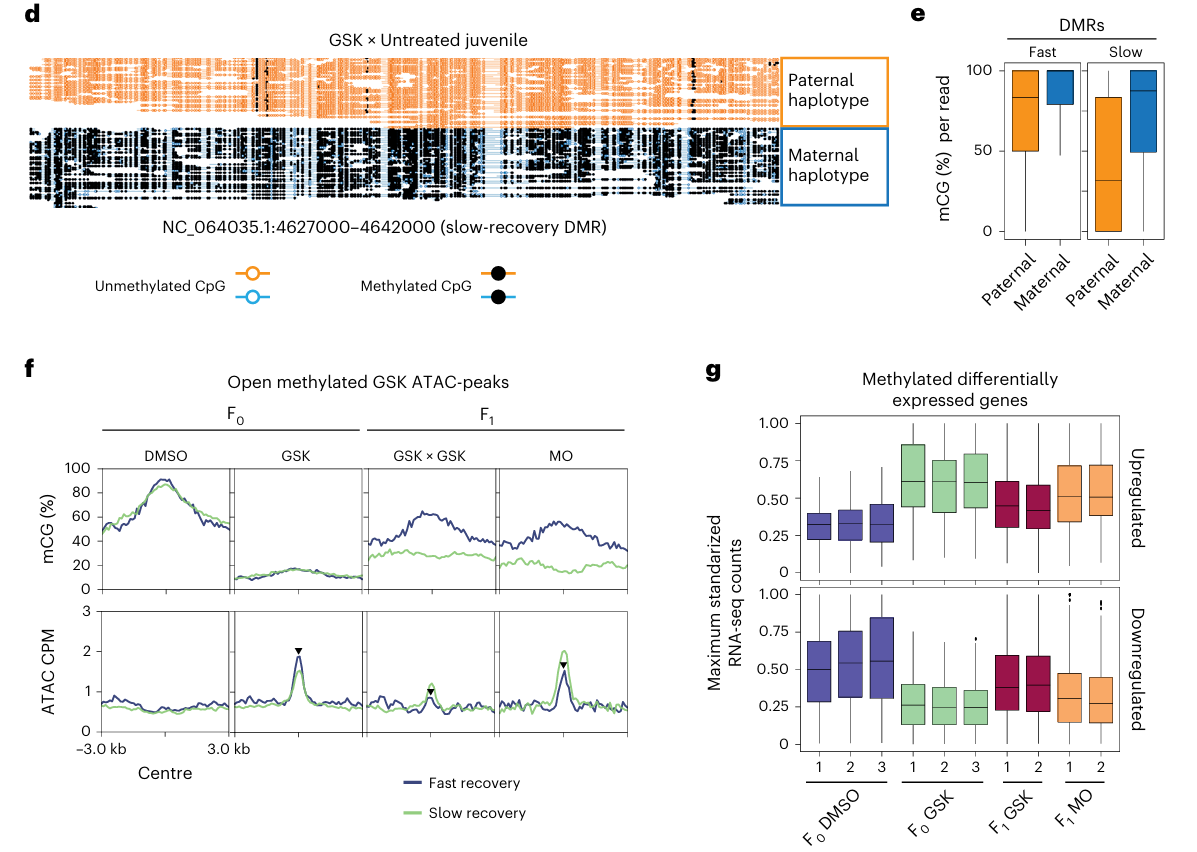
In addition, the team revealed a degree of selective restoration of DNA methylation in the germline guided by transcription-associated chromatin (with de novo methylation probably mediated by DNMT3) but found no evidence for global reprogramming of DNA methylation after fertilization, which provides further support to the idea that gene body methylation primarily functions to control transposon activity, given the critical nature of preserving genome integrity in the germline. Furthermore, the authors hypothesize that this mechanism supports intergenerational inheritance of aberrant DNA methylation, with the lack of widespread reprogramming allowing for the inheritance of "epimutations" across generations.
Gene Body Methylation and Intergenerational Epigenetic Inheritance in Invertebrates
Overall, this exciting study employed the cnidarian Nematostella vectensis as an invertebrate model system to reveal genome defense, rather than transcriptional regulation, as the primary function of gene body methylation; furthermore, the findings also provide evidence that gene body methylation supports intergenerational epigenetic inheritance in invertebrates. The implementation of Paired-Tag technology from Epigenome Technologies, which generates joint epigenetic and transcriptomic profiles at single-cell resolution and detects histone modifications and RNA transcripts in individual nuclei with efficiency comparable to single-nucleus RNA-seq/ChIP-seq assays, has the potential to provide deeper insight into such research aims. Could the simultaneous single-cell analysis of histone modification and transcriptomic profiles have supported an even deeper dive into the roles of various epigenetic mechanisms in invertebrate species such as the starlet sea anemone?