Human Accelerated Regions and Chromatin Looping
Human Accelerated Regions of the Genome Influence Brain Anatomy via Species-specific Chromatin Looping: One of the many human accelerated regions of the genome functions as an enhancer, impacting neurogenesis and brain anatomy by forming chromatin loops.
How Do Human Accelerated Regions Give Rise to Human-Specific Brain Features?
The disproportionately large human cerebral cortex underlies higher-order cognitive functions, such as abstract reasoning and complex language (Sousa et al.). While an amplified neuronal progenitor cell pool in this area drives an increase in the number of neural cells, thereby promoting greater neuroconnectivity (Huilgol et al. and Preuss & Wise), the evolutionary molecular mechanisms accounting for the origin of these human-specific cortical features remain somewhat unknown. The human genome contains thousands of human-specific loci with largely unknown functions, which include DNA sequences known as "human accelerated regions": highly conserved loci that harbor human-specific genome variants. A range of studies has suggested the involvement of these human accelerated regions in the development of human-specific brain features, finding that: i) ~50% of identified human accelerated regions represent transcriptional enhancers in neurons (as indicated by epigenetic analyses; see below); ii) many human accelerated regions lie close to neurodevelopment-associated genes; and iii) human accelerated regions influence the size of the cerebral cortex and the number of neurons through their impact on neural progenitor cells.
The evaluation of alterations to chromosome conformation in human fetal brain samples and in vitro neural progenitor cell cultures had previously revealed that human accelerated regions function as enhancer elements that physically interact with neurodevelopmental gene loci and so may play critical regulatory roles (Won et al., Keough et al., and Pal et al.). Additionally, comparative chromosome conformation analyses of human and chimpanzee neural progenitor cells revealed that human accelerated regions frequently localized within topologically associating domains containing human-specific structural variants that may promote the formation of species-specific chromatin loops and influence enhancer activity (Keough et al.). Of note, human accelerated region-enriched topologically associating domains also contain genes differentially expressed between human and chimpanzee brains (Keough et al. and Pal et al.).
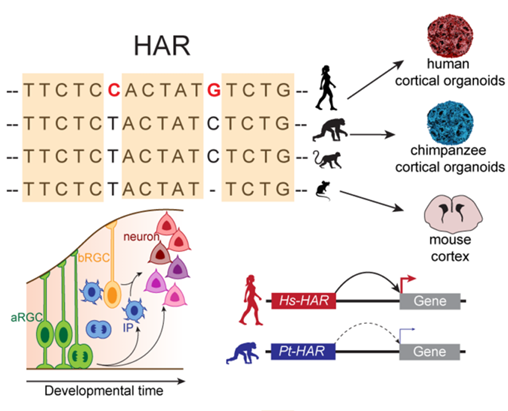
With these studies in mind, researchers led by Debra L. Silver (Duke University School of Medicine) recently sought to describe direct links between human accelerated regions, neurogenesis, and chromosome conformation. Their recent Cell Stem Cell study now reports that a human-specific human accelerated region - known as HAR1984 - acts as an enhancer that boosts neurogenesis, influences brain anatomy by increasing cerebral cortex size and degree of folding, and drives gene expression via species-specific chromatin looping and the formation of a human-specific gene-regulation positive feedback loop (Mosti et al.).
Paired-Tag technology from Epigenome Technologies generates joint epigenetic and transcriptomic profiles at single-cell resolution and detects histone modifications and RNA transcripts in nuclei with efficiency comparable to single-nucleus RNA-seq/ChIP-seq assays. Could an in-depth exploration of the histone modification profiles of human accelerated regions, combined with a transcriptomic analysis of putative target genes in the same single cell via the integration of Paired-Tag, have provided even deeper insight into the influence of these human-specific regions on neurogenesis and brain anatomy?
Hs-HAR1984 Enhancer-mediated Chromatin Looping Promotes Neurogenesis and Impacts Cortical Anatomy
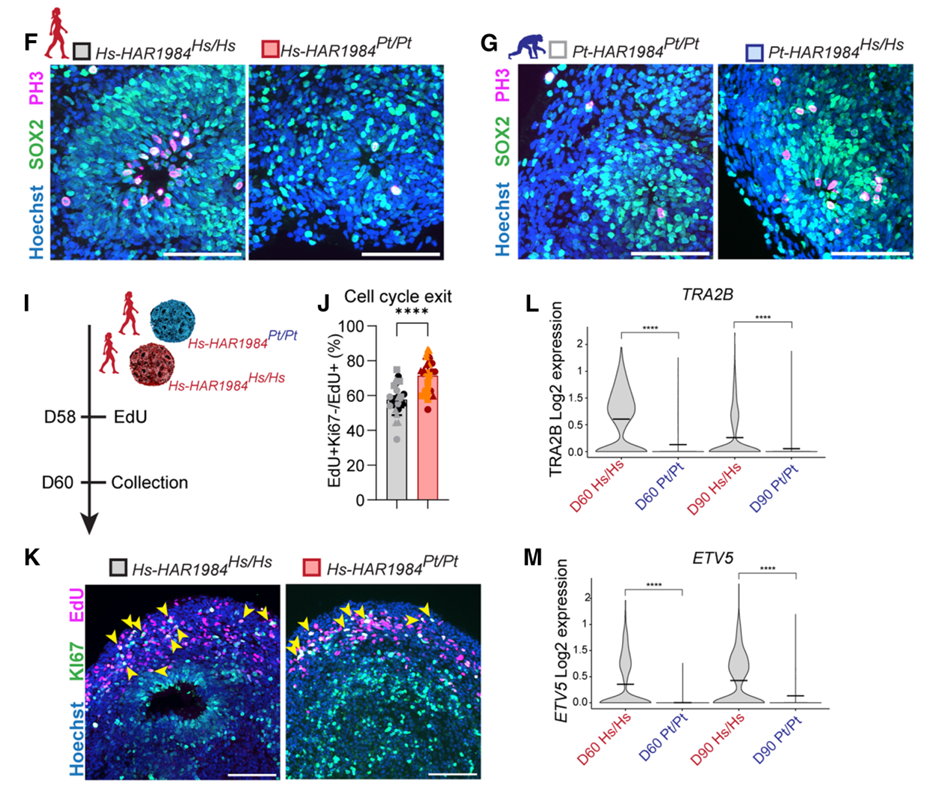
The authors employed CRISPR-edited human and chimpanzee cortical organoids to demonstrate that the presence of the human HAR1984 enhancer directly promoted neural progenitor cell proliferation/identity and increased neuron number. Further analyses in human HAR1984 knock-in mice revealed increases in cortical thickness and cortical folding (which optimizes the functional organization and wiring of the brain and allows a large cortex to fit within a limited cranial volume), driven by expansion in the number of neural progenitor cells and neurons.
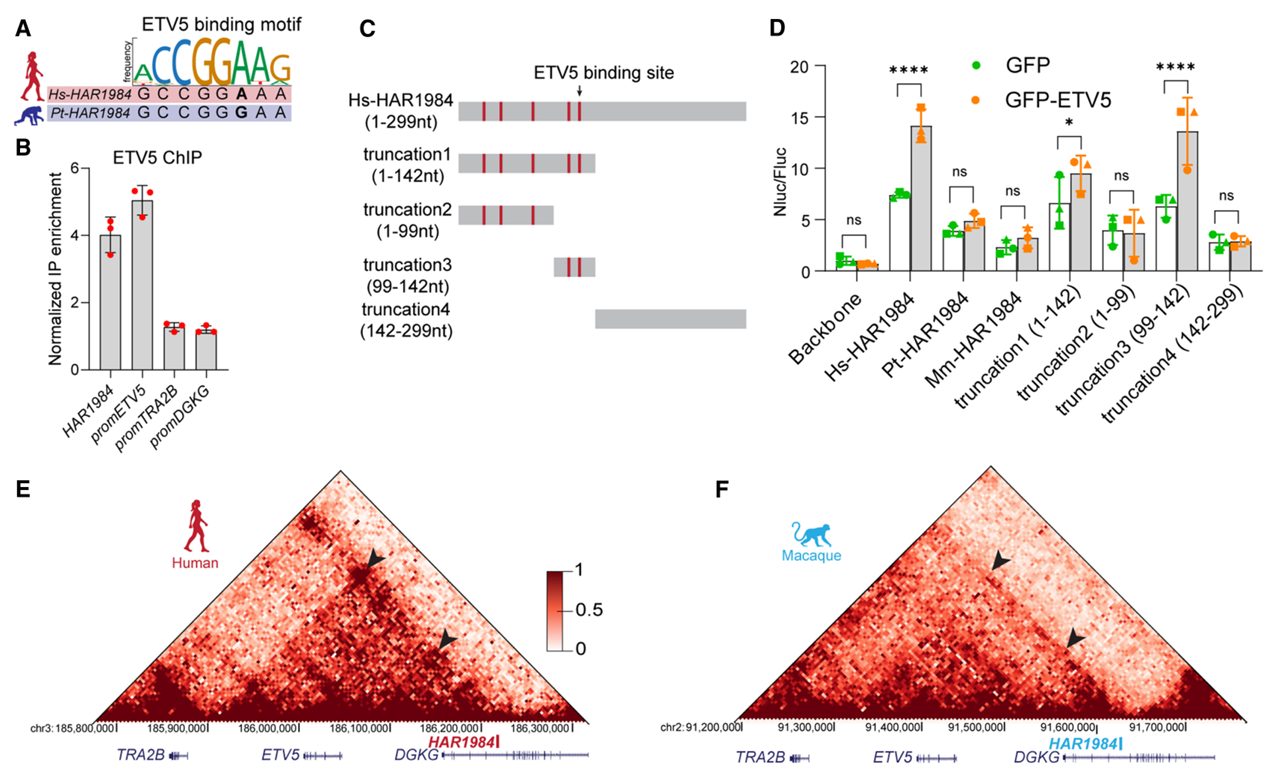
The authors next identified the TRA2B and ETV5 genes - known neurodevelopmental regulators - as direct targets of the human HAR1984 enhancer; furthermore, they demonstrated that the ETV5 transcription factor protein bound to the human HAR1984 enhancer, thereby establishing a positive feedback loop that promotes robust enhancer activation. Previous research had implicated the ETV5 transcription factor in mouse neural progenitor cell differentiation and dendrite arborization (Fontanet et al.) and the influence of the TRA2B splicing factor on mouse brain size, progenitor proliferation, and survival (Storbeck et al. and Roberts et al.).
.
Finally, analyses in human fetal brain samples demonstrated that the presence of the human HAR1984 enhancer promoted the formation of chromatin loops between the ETV5 and TRA2B gene promoters; meanwhile, they observed notably reduced levels of chromatin looping in chimpanzee, macaque, and mouse neural cells when compared to humans. Furthermore, additional in silico modeling predicted that adjacent human-specific structural variants would stabilize this interaction; however, the authors note that further studies will be required to investigate how these structural variants synergize with human accelerated regions to modulate 3D genome topology and human-specific gene expression during human cerebral cortex development.
Defining the Molecular Mechanisms Underlying Human-Specific Neurodevelopment
Overall, this exciting study into the molecular mechanisms underlying human-specific neurodevelopment identifies the human HAR1984 enhancer as an essential component and provides further support for the implication of non-coding regulatory DNA alterations in the emergence of human-specific traits. The reported findings, which integrate in silico, in vitro, and in vivo analyses in human, chimpanzee, and mouse models, now link human accelerated regions to human-specific chromatin conformations, neurogenesis, and cerebral cortex expansion, thus providing a compelling example of how species-specific chromatin conformation contributes to human neurodevelopment.
The implementation of Paired-Tag technology from Epigenome Technologies, which generates joint epigenetic and transcriptomic profiles at single-cell resolution and detects histone modifications and RNA transcripts in individual nuclei with efficiency comparable to single-nucleus RNA-seq/ChIP-seq assays, has the potential to provide deeper insight into such research aims. What more could the simultaneous single-cell analysis of histone modification and transcriptomic profiles tell us about the role of human accelerated regions in influencing gene expression, neurogenesis, and brain anatomy?