Perturb-multiome Identifies Aging and Senescence-Associated lncRNAs as Therapeutic Targets
An exciting study employs Perturb-multiome to identify aging and senescence-associated long non-coding RNAs as potential therapeutic targets.
Can Long Non-Coding RNAs Lead the Fight Against Aging and Senescence?
Developing strategies to counter the double whammy of aging and cellular senescence could yield significant health benefits and, as such, extend the healthy lifespans of patients worldwide. A range of studies have suggested that exploring the world of long non-coding RNAs (lncRNAs) - which function as epigenetic regulators of transcriptomic patterning (Herman et al.) - could provide a breakthrough.
To this end, researchers led by Jing-Dong Jackie Han (Peking University) recently sought to clarify the roles of lncRNAs in aging and cellular senescence by integrating single-cell CRISPR interference-based lncRNA perturbation (leveraging the Perturb-seq framework for the integrative identification of candidates; Replogle et al., Dixit et al., Rubin et al., and Norman et al.) with simultaneous single-nucleus transcriptomic and chromatin accessibility analysis (enabling the coordinated exploration of transcriptomic and epigenetic networks). Their new Nature Aging study now reports on the application of this innovative approach - known as Perturb-multiome - to the identification of aging- and senescence-associated lncRNAs and the delineation of associated transcriptional and epigenetic networks and functions. Furthermore, this fascinating approach also specifically identified overexpression of the HOTAIRM1 lncRNA as a potential means to alleviate multiple aging- and senescence-associated signs in vitro and in vivo (Zhu and Ying et al.).
Paired-Tag technology from Epigenome Technologies generates joint epigenetic and transcriptomic profiles at single-cell resolution and detects histone modifications and RNA transcripts in nuclei with efficiency comparable to single-nucleus RNA-seq/ChIP-seq assays. Could an in-depth analysis of histone modifications and transcriptomic profiles of the same single cells via the integration of Paired-Tag reveal more regarding how aging- and senescence-associated lncRNAs impact transcriptional and epigenetic networks and functions?
Identifying Aging and Senescence-Associated High-Abundance Long Non-Coding RNAs with Perturb-multiome
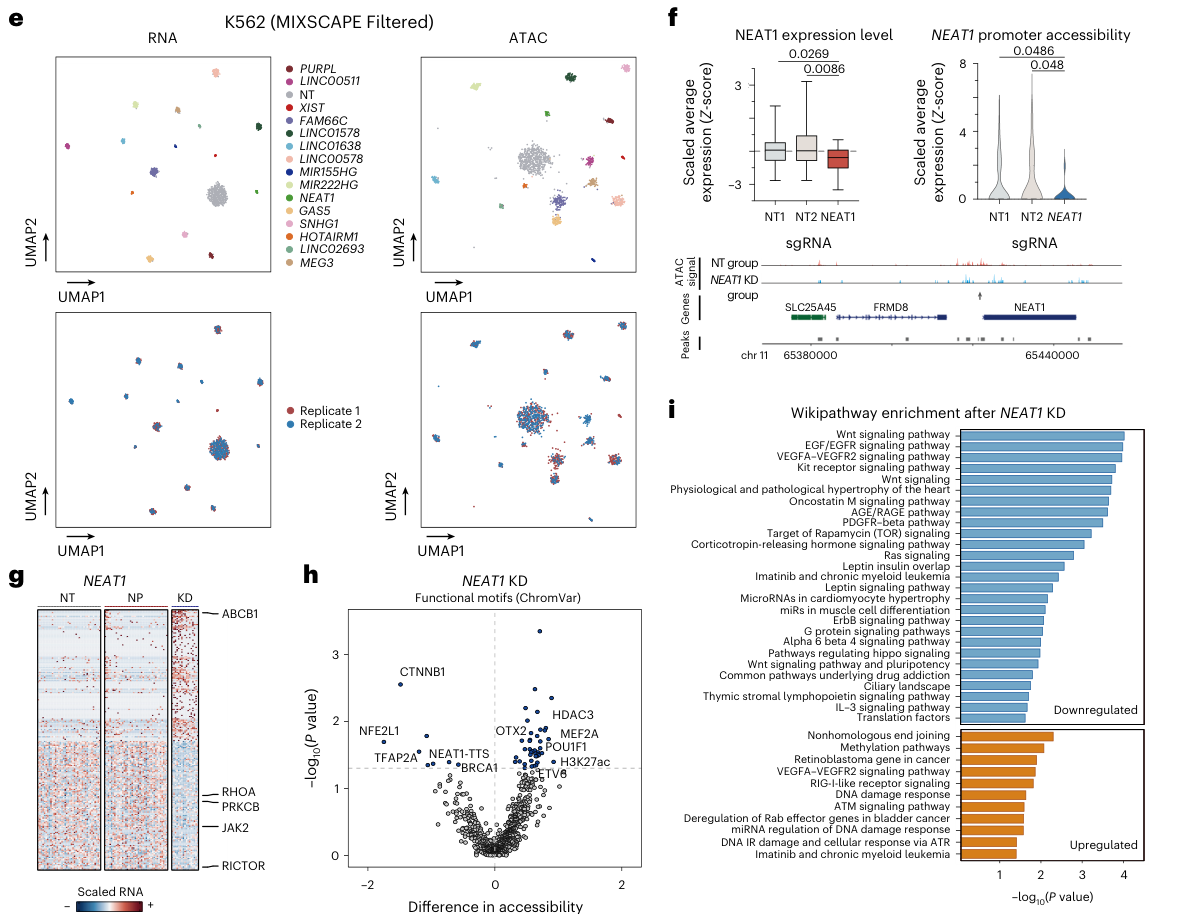
The authors first identified aging- and senescence-associated lncRNAs expressed in human tissues as targets for Perturb-multiome-based analysis; these "perturbation-targetable aging and senescence-associated high-abundance lncRNAs" included well-characterized aging- and senescence-associated lncRNAs (such as GAS5, MEG3, XIST, MALAT1, MIAT, and NEAT1) (Grammatikakis et al.) as well as a host of previously uncharacterized lncRNAs. Initial in vitro Perturb-multiome-based analyses in cancer and normal cells revealed that targeting the NEAT locus (as an example) by CRISPR interference reduced lncRNA expression levels and promoter accessibility, prompting alterations in transcriptomic, transcription factor motif accessibility, and chromatin accessibility profiles genome-wide. Subsequent analysis of the uncharacterized lncRNAs with senescence-associated effects also demonstrated aging- and senescence-linked transcriptomic and chromatin impacts; examples of these lncRNAs included MIR155HG, whose knockdown reduced senescence and enhanced DNA repair and longevity pathways, and HOTAIRM1, whose knockdown increased senescence through DNA damage responses and p53 activation. Modulation of levels of the remaining lncRNA candidates also yielded comparable results, which the authors computationally and experimentally validated; overall, these findings underscored the robustness of Perturb-multiome when identifying aging/senescence-associated lncRNAs.
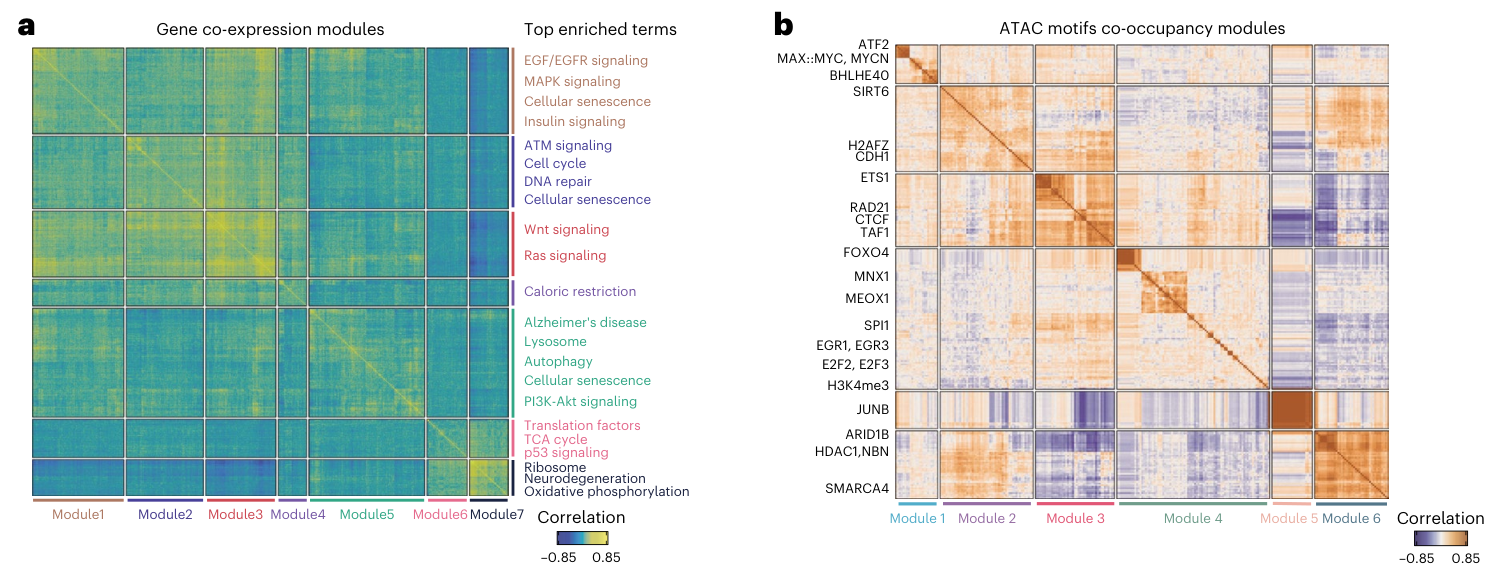
The study went on to reveal the ability of perturbation-targetable aging and senescence-associated high-abundance lncRNAs to coordinate epigenetic and transcriptional networks to regulate senescence and aging-associated pathologies. A focus on HOTAIRM1 suggested that this lncRNA helped to maintain DNA repair activities and chromatin stability during senescence (Chuang et al.) and regulated transcriptional programs through the activity of chromatin remodeling factors, including DNA repair-implicated factors such as BANF1 and ARID1B (Burgess et al. and Park et al.). Perturb-multiome analysis revealed that HOTAIRM1 linked DNA repair capacity and ribosome-associated gene expression programs during senescence, while an examination of HOTAIRM1 evolutionary conservation and expression dynamics demonstrated a potential role for this lncRNA in maintaining genome homeostasis and underscored HOTAIRM1 deficiency as a potent driver of senescence and aging. LncRNAs frequently mediate their regulatory effects by interacting with RNA-binding proteins (Herman et al.), and here, the authors highlighted the binding of p53 and BANF1 to HOTAIRM1. Mapping the genome-wide DNA-binding landscape of HOTAIRM1 using chromatin isolation by RNA purification (CHIRP)-seq revealed peaks at promoters for genes associated with ribosome biogenesis, longevity regulation, and DNA repair (among others). Of note, BANF1 and HOTAIRM1 binding overlapped at the promoters of DNA-repair-related genes, suggesting a physical association. As such, their subsequent research demonstrated that HOTAIRM1 collaborated with BANF1 and p53 to stabilize DNA damage repair at DNA double-strand breaks within liquid-like condensates; meanwhile, the loss of HOTAIRM1 disrupted this mechanism, impairing DNA repair and promoting p53-mediated cellular senescence.
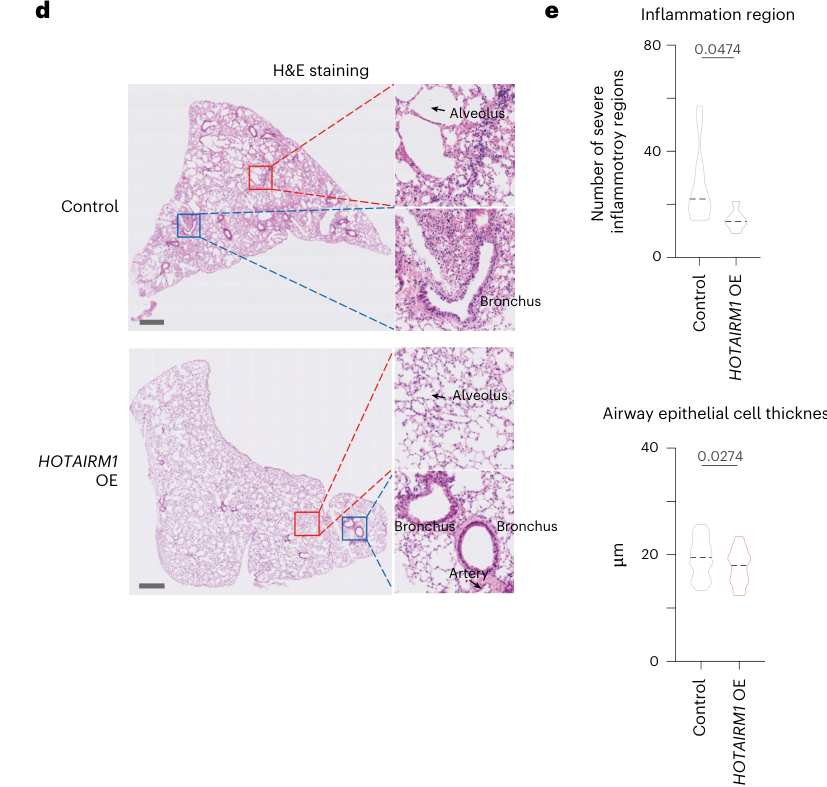
While much of this work employed in vitro cell models, the final part of this exciting study evaluated the therapeutic potential of perturbation-targetable aging- and senescence-associated high-abundance lncRNAs in vivo. Specifically, the authors employed an adeno-associated virus delivery strategy to overexpress HOTAIRM1 in a mouse model of lung aging characterized by fibrosis (driven by senescence, impaired repair, and dysregulated inflammation), tissue damage, and structural deterioration of alveoli and airways (Schneider et al.). Interestingly, HOTAIRM1 overexpression led to improved pathology in aged mice, including reduced fibrosis, decreased inflammation, and lower tissue injury, thereby supporting the therapeutic potential of this approach.
Long Non-Coding RNAs in Aging and Senescence: The Way Forward
The integrative multiomics approach employed supported the dissection of the regulatory roles of lncRNAs in aging and senescence, highlighting roles in cellular homeostasis, DNA repair, and tissue aging; furthermore, the authors underscored the potential of HOTAIRM1 to mitigate aging-associated pathologies in the mouse lung. Future work may look to study the impact of additional uncharacterized lncRNA candidates, potential RNA-DNA interactions at promoter regions, potential off-target effects of lncRNA modulation, the implication of lncRNAs in additional repair pathways and broader processes (including ribosomal and mitochondrial function and inflammatory pathways), and single-cell and spatial profiling in relevant tissues to define cell-type-specific activity in vivo and explore regional aging features. The implementation of Paired-Tag technology from Epigenome Technologies, which generates joint epigenetic and transcriptomic profiles at single-cell resolution and detects histone modifications and RNA transcripts in individual nuclei with efficiency comparable to single-nucleus RNA-seq/ChIP-seq assays, has the potential to provide deeper insight into such research aims. Could the simultaneous single-cell analysis of histone modification and transcriptomic profiles help to take the research described in this fascinating new study to the next level?